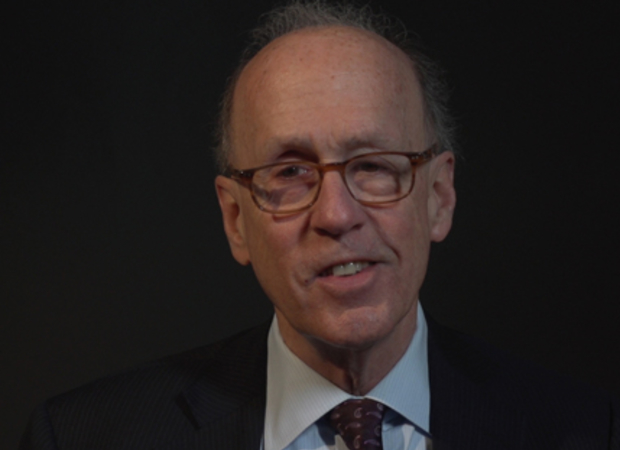
Stephen Roach has been a member of the Yale faculty since 2010. After 13 years as the first senior fellow of Yale’s Jackson Institute of Global Affairs, he joined Yale Law School’s Paul Tsai China Center in 2022. He was formerly Chairman of Morgan Stanley Asia and the firm’s Chief Economist for the bulk of his 30-year career at Morgan Stanley.

A rare combination of thought leadership on Wall Street and academia places Roach in a unique position as a leading practitioner of analytical macroeconomics. At Yale, he introduced new courses for undergraduates and graduate students on “The Next China” and “The Lessons of Japan.” Roach’s current research program focuses on the conflict-prone U.S.-China relationship.

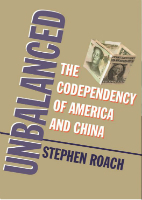
His latest book, Accidental Conflict: America, China, and the Clash of False Narratives (Yale University Press, 2022) examines the ominous trajectory of conflict escalation between the United States and China and a provides a unique roadmap for conflict resolution. His book Unbalanced: The Codependency of America and China (Yale University Press, 2014) explores the risks and opportunities of what is likely to be the world’s most important economic relationship of the 21st century. The Next Asia: Opportunities and Challenges for a New Globalization (Wiley, 2009) analyzes Asia’s economic imbalances and the dangers of the region’s excess dependence on overextended Western consumers.

Prior to joining Morgan Stanley in 1982, Roach served on the research staff of the Federal Reserve Board and was also a research fellow at the Brookings Institution. He holds a Ph.D. in Economics from New York University. Roach is a member of the Council on Foreign Relations, the Investment Committee of the Metropolitan Museum of Art, the Economics Advisory Board of the University of Wisconsin, and the Advisory Board of NYU’s Graduate School of Arts and Sciences.

Last Updated: August 18, 2025

Conversation

08.19.25

How Much Has Trump Changed His Position on China?

James McGregor, Wendy Cutler & more
U.S. President Donald Trump came into office with tough talk on China, including promises to enact huge tariffs on China and erect a new trade regime, “aggressive new restrictions” on Chinese ownership of American land, an end to fentanyl...

Conversation

04.04.17

What Should We Expect When Trump and Xi Meet in Florida?

David Dollar, Jeremy Goldkorn & more
On April 6-7, U.S. President Donald Trump will host Xi Jinping in their first face-to-face meeting when China’s President arrives at Trump’s Mar-a-Lago resort. The meeting comes early in Trump’s presidency, after a campaign in which he frequently...

Conversation

07.12.16

China’s Claims in the South China Sea Rejected

Andrew S. Erickson, Peter Dutton & more
On Tuesday in the Hague, the Permanent Court of Arbitration rejected China’s claims that a scattering of rocks and reefs in the contested South China Sea qualify as Exclusive Economic Zones for China. The court found in favor of the Philippines’...

Conversation

01.27.16

Is George Soros Right that China’s Headed for a Hard Landing?

Arthur R. Kroeber, Stephen S. Roach & more
On Tuesday in an article headlined, “Declaring War on China’s Currency? Ha ha,” the People’s Daily attacked billionaire investor George Soros for suggesting he might short the renminbi. The Chinese currency has dropped 5.7 percent since August when...

Conversation

03.24.15

What Went Wrong With U.S. Strategy on China’s New Bank and What Should Washington Do Now?

Patrick Chovanec, Zha Daojiong & more
Now that much of Europe has announced its intentions to join the China-led Asian Infrastructure Investment Bank (AIIB), was Washington’s initial opposition a mistake? Assuming the AIIB does get off the ground, what might it mean for future...

Books

03.19.14

Unbalanced

Stephen Roach
The Chinese and U.S. economies have been locked in an uncomfortable embrace since the late 1970s. Although the relationship initially arose out of mutual benefits, in recent years it has taken on the trappings of an unstable codependence, with the two largest economies in the world losing their sense of self, increasing the risk of their turning on one another in a destructive fashion.In Unbalanced: The Codependency of America and China Stephen Roach lays bare the pitfalls of the current China-U.S. economic relationship. He highlights the conflicts at the center of current tensions, including disputes over trade policies and intellectual property rights, sharp contrasts in leadership styles, the role of the Internet, the recent dispute over cyberhacking, and more.A firsthand witness to the Asian financial crisis of the late 1990s, Roach likely knows more about the U.S.-China economic relationship than any other Westerner. Here he discusses:Why America saving too little and China saving too much creates mounting problems for bothHow China is planning to re-boot its economic growth model by moving from an external export-led model to one of internal consumerism with a new focus on service industriesHow America shows a disturbing lack of strategy, preferring a short-term reactive approach over a more coherent Chinese-style planning frameworkThe way out: what America could do to turn its own economic fate around and position itself for a healthy economic and political relationship with ChinaIn the wake of the 2008 crisis, both unbalanced economies face urgent and mutually beneficial rebalancings. Unbalanced concludes with a recipe for resolving the escalating tensions of codependence. Roach argues that the Next China offers much for the Next America—and vice versa.—Yale University Press{chop}

Caixin Media

12.07.12

China’s Dream Team

Stephen S. Roach
The country’s recent leadership transition was widely depicted as a triumph for conservative hardliners and a setback for the cause of reform—a characterization that has deepened the gloominess that pervades Western perceptions of China.In fact,...

Recommended Links

via
South China Morning Post
01.06.14

(Op-ed) China's economic planners need to prune and prioritise their myriad policy objectives so the country can move with purpose towards the goal of structural rebalancing. 

Topics: Economy, Politics