Return of the Pekingologist

Research Strategies for the Era of the Sentinel State

For scholars researching authoritarian regimes, the world is becoming harder to read. Access to fields, archives, and information in China, as in Russia and elsewhere, has dwindled. Sweeping data security laws now frame routine in-country data-gathering as potential espionage. We are returning to an era reminiscent of the Cold War, in which researchers must once again navigate inherently hostile environments that systematically constrain access, criminalize investigations, and conceal data. Yet, retreat is not an option. As China and the West remain deeply intertwined economically and geopolitically, policymakers and scholars need actionable insights into the state’s inner workings. But with highly restricted access, how can we construct valid knowledge?

What Actually Happened at the Xi-Trump Summit

A ChinaFile Conversation

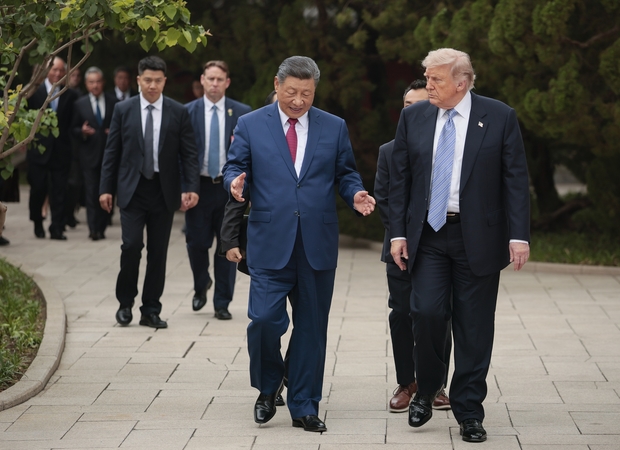
On September 24, U.S. President Donald Trump hosted Chinese leader Xi Jinping at the White House for their second summit of the year. The meeting advanced new mechanisms on trade and investment, and launched the U.S.-China bilateral dialogue on artificial intelligence, while leaving many of the relationship’s most difficult questions—from Taiwan to technology competition—unresolved.

Simona Grano

Simona A. Grano is Head of the Research Area China-Taiwan Relations, Senior Lecturer in Chinese Studies as well as Managing Director of the Taiwan Studies Project at the University of Zurich. Her research focuses on the geopolitical and societal dynamics of China and Taiwan, with particular emphasis on China-Taiwan-U.S. relations, Switzerland’s relations with China and Taiwan, and the implications of U.S.-China strategic competition for Switzerland and other small and middle powers.

Since 2024, she has been a Senior Fellow on Taiwan at the Center for China Analysis of the Asia Society Policy Institute (ASPI) in New York. She is also a Research Fellow at the European Research Center on Contemporary Taiwan (ERCCT) in Tübingen and a Research Associate at SOAS University of London.

Grano is the author and editor of several books and numerous academic and policy publications on China, Taiwan, and international relations. She regularly contributes her expertise to international and Swiss media and advises on developments at the intersection of geopolitics, economics, and China-Taiwan relations.

Grano completed her Ph.D. in Chinese Studies at Ca’ Foscari University of Venice, Italy.

Scott Shaw

Scott Shaw joined The Cohen Group in 2024 following a 36-year career with the Department of Commerce, retiring as a Senior Foreign Service Officer with the rank of Minister-Counselor. He co-leads the firm’s China practice. He is a Non-Resident Senior Fellow on Chinese Economy at the Asia Society Policy Institute's Center for China Analysis.

Shaw held numerous senior positions at the Department of Commerce. He served as the Deputy Assistant Secretary for China and Mongolia, overseeing a team of professionals in mainland China, Hong Kong, and the United States and advising Commerce Department leadership on U.S.-China bilateral trade policy and market access issues. He led the Commerce Department’s re-engagement strategy with China, establishing the Commercial Issues Working Group. He also briefed Commerce leadership ahead of Vice-Ministerial meetings, led engagement with counterparts at China’s Ministry of Commerce, and supported the U.S. trade promotion agenda with China. Shaw also worked across the U.S. government on economic and commercial issues, often representing the Commerce Department at the National Security Council.

Prior to his role as Deputy Assistant Secretary, Shaw was the Minister-Counselor for Commercial Affairs in Brasilia. He also served as Counselor for Commercial Affairs in Beijing, where he had day-to-day management responsibilities for the Commerce Department’s largest overseas presence. Shaw also served as the Senior Commercial Officer at the U.S. Consulate in Hong Kong, as well as the Deputy Senior Commercial Officer for Brazil at the US Consulate in São Paulo.

Shaw served as Commercial Attaché in Bangkok and as the Director of the U.S. Commercial Center in Shanghai. He began his foreign service career at the U.S. Consulate in Guangzhou, where he received the Commerce Department’s Individual Gold Medal Award, the highest award granted by the Secretary of Commerce for excellence in federal service. Shaw has received multiple State Department Meritorious Honor Awards during his career, and a Commerce Group Gold Medal Award from his tour in Beijing. He began his career with the Commerce Department in positions in Washington, D.C., Chicago, and Manila.

Shaw received a B.A. in Government from Cornell University and is a past participant of the Cornell Public Policy program in Washington, D.C. He speaks Brazilian Portuguese and has a working knowledge of Mandarin Chinese.

Alvin Wang Graylin

Alvin Wang Graylin (汪丛青) is a Senior Fellow on Technology at the Asia Society Policy Institute’s Center for China Analysis, a Digital Fellow at Stanford’s Institute for Human-Centered AI, and a lecturer at Massachusetts Institute of Technology (MIT). He is also Chair of the Virtual World Society and co-author of Our Next Reality.

With more than 35 years of working experience split between the United States and China, his career spans artificial intelligence, semiconductors, data centers, immersive computing, and cybersecurity. He has held executive roles at HTC, Intel, IBM, and Trend Micro, founded four venture-backed startups, and invested in more than 100 early stage technology companies.

Graylin advises governments, multilateral organizations, and Fortune 100 leaders on AI policy, global technology governance, and the socioeconomic transition associated with advanced AI systems. He speaks internationally on technology’s impact on the economy and society, geopolitical risk, and strategies to ensure AI advances broad based prosperity and stability.

He holds a Bachelor of Science in Electrical Engineering from the University of Washington and Master of Science in Computer Science and Management from MIT and MIT Sloan School of Management. He is fluent in English, Mandarin, and Cantonese. Born in China and raised in the United States with mixed race heritage, Graylin is committed to fostering practical dialogue and mutually beneficial cooperation between these two great nations.

What to Watch at the Xi-Trump Summit

A ChinaFile Conversation

On September 24, Chinese President Xi Jinping will meet U.S. President Donald Trump at the White House, four months after Trump’s state visit to Beijing in May. Several consequential elements of the relationship remain unsettled ahead of the September summit. The export-control truce reached in Busan on October 30, 2025—which holds both Washington’s Affiliates Rule and China’s October 9 rare-earth export-control package in abeyance—runs for one year, leaving its future uncertain. Preparations for a bilateral AI risk-and-safety dialogue are reportedly underway, although its timing, participants, and agenda remain unsettled. And, according to some analysis, Washington and Beijing construe “constructive strategic stability” quite differently. The administration has also delayed announcing the proposed $14 billion U.S. arms sale for Taiwan, despite its having received congressional pre-approval in January.

Jennifer Choo

Jennifer Choo is the Director of Research and Strategy at the Asia Society Policy Institute’s Center for China Analysis (CCA). Prior to taking this position, she served in varying leadership roles at Stanford University for more than seven years, first as the Associate Director of the Stanford China Program at the Walter H. Shorenstein Asia-Pacific Research Center (2016-2021) and then more recently as the Strategic Policy Advisor at the Stanford Center on China’s Economy and Institutions (SCCEI) (2021-2024). At Stanford, her role included not only advancing research projects on contemporary China, but also convening global thought leaders and “translating” complex ideas into accessible content for a sophisticated yet lay audience. In her last position at SCCEI, she played a key role in developing and launching the center’s flagship initiative, SCCEI China Briefs, which communicates data-intensive academic research on contemporary China to decisionmakers at the highest levels of government and business. Her current position at CCA also marks Choo’s return to Asia Society, as she served as Director of Programs at Asia Society Northern California from 2014 to 2016.

Choo received her Ph.D. from U.C. Berkeley’s Sociology Department and also holds a J.D. from Stanford Law School. She has over 25 years of on-the-ground and U.S.-based experience involving China and wider Asia, conducting research, establishing partnerships, and convening international thought leaders.

Prior to her doctorate, she worked at The China Law Center (now the Paul Tsai China Center) of Yale Law School helping to collaborate on rule of law programs with various Chinese institutions. A Ford Foundation individual grant first took her to China in 1998 to work on rule of law initiatives. Choo is the recipient of the National Science Foundation Fellowship and the Fulbright-Hays Doctoral Dissertation Research Abroad Program. She graduated with a Bachelor of Arts from Harvard University.

Reading My Own Life

M Lin’s ‘The Memory Museum’ Depicts the Choices and Contradictions of a Generation of Urban Chinese Women Who Rarely Tell Their Own Stories

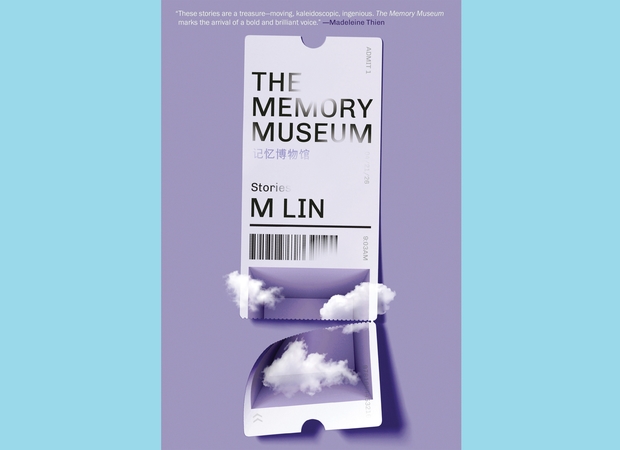
A few months ago, a book with a slightly torn ticket on its lilac cover began emerging on my Instagram feed. A small, faint Chinese translation of the title and the author’s last name, Lin, hinted it had something to do with China. I was intrigued because the cover had no trace of red, no stars or dragons, cranes or bamboo that scream CHINA!