


ChinaFile Recommends
02.22.13Does China Have An Army Of Hackers?
New Yorker
The accumulated evidence should retire the old notion that China’s most sophisticated hackers are just patriots freelancing from their parents’ basements.
ChinaFile Recommends
02.22.13China Says Army Is Not Behind Attacks In Report
New York Times
Geng Yansheng, a spokesman for the Ministry of National Defense, says “The claim by the Mandiant company that the Chinese military engages in Internet espionage has no foundation in fact.”
ChinaFile Recommends
02.22.13What Do We Make Of The Chinese Hacking?
Atlantic
Is this recent hacking really something new? Or merely our "threat inflation,"* cued both to the impending sequestration menace and February 2013 SOTU mentions of new efforts in cyber-security?
ChinaFile Recommends
02.22.13U.S.: Hacking Attacks Are Constant Topic Of Talks With China
McClatchy
Obama administration officials acknowledged that China’s involvement in cyber-attacks is a near-constant subject of conversation between the nations’ officials but that there have been few signs that China is willing to stop the attacks.
Media
02.20.13
On China’s Twitter, Discussion of Hacking Attacks Proceeds Unblocked
As The New York Times reported yesterday evening, U.S.-based cybersecurity firm Mandiant has just released a deeply troubling report called “Exposing One of China’s Cyber Espionage Units.” The report alleges wide-spread hacking sponsored by the...
ChinaFile Recommends
02.20.13U.S. Security Group Suspects P.L.A. Behind Hacking Attacks
Reuters
A secretive Chinese military unit is believed to be behind a series of hacking attacks, prompting a strong denial by China and accusations that it was in fact the victim of U.S. hacking.
ChinaFile Recommends
02.20.13China Denies It Is World’s Biggest Trader Despite Data Showing It Passed U.S. Last Year
Washington Post
Official Chinese and American trade data indicate China passed the United States last year in total imports and exports by a margin of $3.866 trillion to $3.822 trillion.
Conversation
02.20.13
Cyber Attacks—What’s the Best Response?
With regular ChinaFile Conversation contributor Elizabeth Economy on the road, we turned to her colleague Adam Segal, Maurice R. Greenberg Senior Fellow for China Studies at the Council on Foreign Relations in New York. Segal said that “the time for...
ChinaFile Recommends
02.20.13China Won’t Cut Its Cyberspying
New York Times
Some Obama advisers have recommended harsh action to send a clear signal to China to change its ways. But even if the Americans retaliate, China is unlikely to respond as they might hope.
Conversation
02.15.13
U.S.-China Tensions: What Must Kerry Do?
Dorinda Elliott:On a recent trip to China, I heard a lot of scary talk of potential war over the disputed Diaoyu Islands—this from both senior intellectual types and also just regular people, from an elderly calligraphy expert to a middle-aged...
Infographics
02.14.13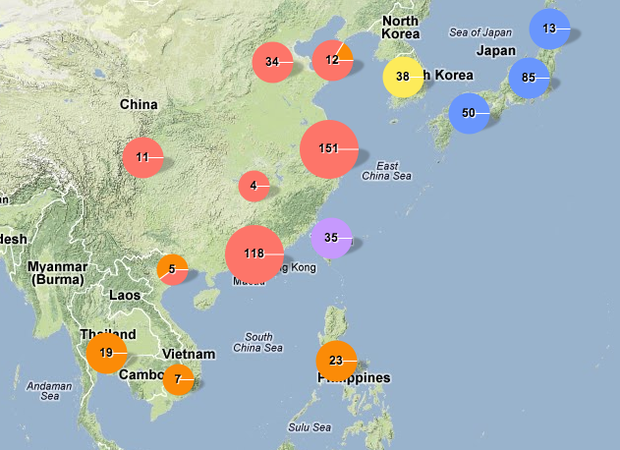
Who Supplies Apple? (It’s Not Just China)
Last month, Apple Inc. released its updated list of suppliers. This report says it includes “the major manufacturing locations of suppliers who provide raw materials and components or perform final assembly on Apple.” ChinaFile used this data to...
Environment
02.14.13
A Progress Report on U.S.-China Energy & Climate Change Cooperation
In his second inaugural address, President Barack Obama committed to confronting climate change, stating, “The path towards sustainable energy sources will be long and sometimes difficult. But America cannot resist this transition; we must lead it...
Media
02.11.13
Covering China: Yesterday, Today, and Tomorrow
On February 5, 2013, ChinaFile celebrated its official launch by bringing together a panel of former and current New York Times correspondents, whose collective China experience spans the course of half a century, to discuss their coverage of China...
Caixin Media
02.04.13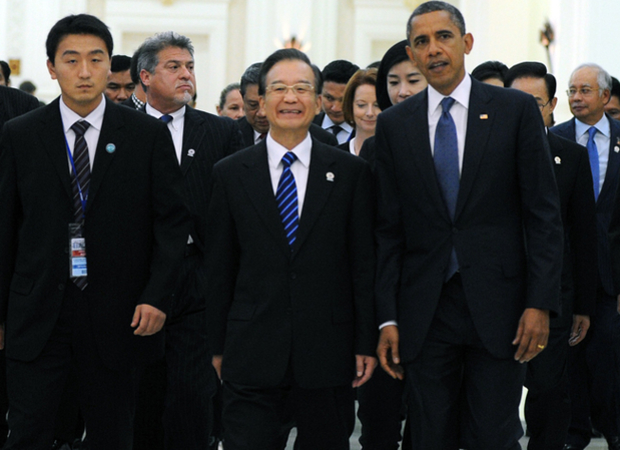
Defining the Chinese Dream
A new phase of Sino-American relations is poised to begin now that Xi Jinping has been confirmed as China’s next leader and Barack Obama re-elected U.S. president.In both countries, the debate about foreign policy options has been robust,...
The China Africa Project
02.03.13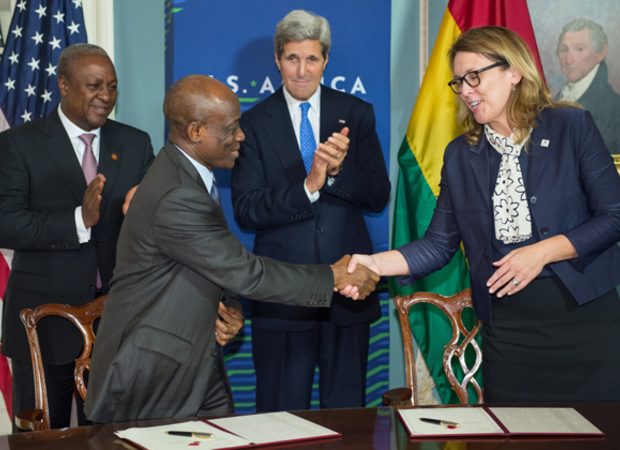
Rally Cry for the U.S. to Catch Up to the Chinese in Africa
In this episode of the China in Africa Podcast, hosts Eric Olander and Cobus van Staden focus on Delaware Senator Chris Coons' warning that unless the United States places a greater emphasis on Africa, it will be too late to catch up to the...
Media
12.17.12
Media Effort to Emphasize Newtown Tragedy Backfires in Blogosphere
Tragedy can strike anywhere. Mere hours before the horrific shooting at an American school in Newtown, Connecticut that left twenty-eight people dead, including twenty children, a horrific school attack also happened in China. At an elementary...
ChinaFile Recommends
12.17.12Who Was Monica Liang?
Indianapolis Star
A Chicago lawyer who has lured millions in Chinese investment said he was impressed by Liang's ability to build relationships.
Books
12.12.12
China’s Search for Security
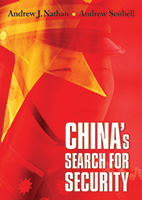
Despite its impressive size and population, economic vitality, and drive to upgrade its military capabilities, China remains a vulnerable nation surrounded by powerful rivals and potential foes. The key to understanding China’s foreign policy is to grasp these geostrategic challenges, which persist even as the country comes to dominate its neighbors. Andrew J. Nathan and Andrew Scobell analyze China’s security concerns on four fronts: at home, with its immediate neighbors, in surrounding regional systems, and in the world beyond Asia. By illuminating the issues driving Chinese policy, they offer new perspective on China’s rise and a strategy for balancing Chinese and American interests in Asia. Though rooted in the present, Nathan and Scobell’s study makes ample use of the past, reaching back into history to contextualize the people and institutions shaping Chinese strategy. They examine Chinese views of the United States; explain why China is so concerned about Japan; and uncover China’s interests in such trouble spots as North Korea, Iran, and the Sudan. The authors probe recent troubles in Tibet and Xinjiang and establish links to forces beyond China’s borders. They consider the tactics deployed by both sides of mainland China and Taiwan’s complicated relationship, as Taiwan seeks to maintain autonomy while China tries to move toward unification, and they evaluate the strengths and weaknesses of China’s three main power resources—economic power, military power, and soft power. The book concludes with recommendations for the United States as it seeks to manage China’s rise. Chinese policymakers understand that the nation’s prosperity, stability, and security depend on cooperation with the U.S, and if handled wisely, relations between the two countries could produce mutually beneficial outcomes in Asia and throughout the world. —Columbia University Press
Books
12.04.12
Tangled Titans
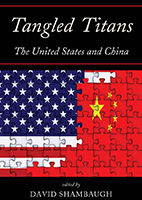
Tangled Titans offers a current and comprehensive assessment of the most important relationship in international affairs—that between the United States and China. How the relationship evolves will have a defining impact on the future of world politics, the Asian region, and the citizens of many nations. In this definitive book, leading experts provide an in-depth exploration of the historical, domestic, bilateral, regional, global, and future contexts of this complex relationship. The contributors argue that the relationship is a unique combination of deep interdependence, limited cooperation, and increasing competition. Never in modern history have two great powers been so deeply intertwined—yet so suspicious and potentially antagonistic toward each other. Exploring this cooperative and competitive dynamic, the contributors offer a wealth of detail on contemporary Sino-American relations unavailable elsewhere. Students will find Tangled Titans essential reading to understand the current dynamics and future direction of relations between the world’s two most important powers.—Rowman & Littlefield Publishers
ChinaFile Recommends
11.13.12The U.S.-China Reset
New York Times
The leaders of the U.S. and China may not want to say it out loud, but they would privately admit that U.S.-China relations are in trouble.
Sinica Podcast
11.10.12
Eighteenth Party Roundup
from Sinica Podcast
This week on Sinica, our hosts Kaiser Kuo and Jeremy Goldkorn are joined by Gady Epstein from the Economist and we turn our attention to the Eighteenth Party Congress, which officially started in Beijing earlier this week. As China’s capital...
ChinaFile Recommends
11.05.12When Madison Met Handan – A Tale of Two Cities
Wall Street Journal
It’s unlikely that many of the 60 Chinese investors who visited Madison in September had heard of the Wisconsin state capital and home of the University of Wisconsin Badgers before agreeing to visit the U.S. Similarly the city of Handan, the Chinese...
ChinaFile Recommends
11.04.12The Five “Vermin” Threatening China
China Story
In Yuan Peng’s 2012 repertoire of what are now popularly known as the ‘New Black Five Categories of People’ were identified as: rights lawyers, underground religious activities, dissidents, Internet leaders and vulnerable groups
ChinaFile Recommends
11.04.12The Problem with the Pivot
Foreign Affairs
Ever since the Chinese leader Deng Xiaoping opened up his country’s economy in the late 1970s, China has managed to grow in power, wealth, and military might while still maintaining cooperative and friendly relations with most of the world...
Reports
10.18.12
Cyber Detente Between the United States and China
EastWest Institute
In May 2012, the United States and China agreed publicly for the first time to begin talks on military aspects of cybersecurity. The agenda and expectations for this process at the official level remain to be set. Through Track 2 processes some very...
ChinaFile Recommends
10.09.12The Pivot (Video)
University of Southern California, U.S.-China Institute
The Obama administration has made Asia a top priority for U.S. foreign policy. The move has been dubbed "The Pivot," and it has the potential to be one of the most enduring legacies of the Obama presidency.
ChinaFile Recommends
10.08.12Huawei Fires Back at the U.S.
Wall Street Journal
Chinese telecommunications giant Huawei Technologies Inc. lashed out Monday at a scathing congressional report, calling allegations that it may be spying on Americans and violating U.S. laws "little more than an exercise in China-bashing."
ChinaFile Recommends
10.05.12Ralls vs. CFIUS: What Are the Implications for Chinese Investment?
Council on Foreign Relations
First, this was not a political move by the President to position himself as tough on China, as suggested by some. The timeline of the review through the Committee on Foreign Investment in the United States (CFIUS) and the Presidential...
Books
09.27.12
Restless Empire
As the twenty-first century dawns, China stands at a crossroads. The largest and most populous country on earth and currently the world’s second biggest economy, China has recently reclaimed its historic place at the center of global affairs after decades of internal chaos and disastrous foreign relations. But even as China tentatively reengages with the outside world, the contradictions of its development risks pushing it back into an era of insularity and instability—a regression that, as China’s recent history shows, would have serious implications for all other nations.In Restless Empire, award-winning historian Odd Arne Westad traces China’s complex foreign affairs over the past 250 years, identifying the forces that will determine the country’s path in the decades to come. Since the height of the Qing Empire in the eighteenth century, China’s interactions—and confrontations—with foreign powers have caused its worldview to fluctuate wildly between extremes of dominance and subjugation, emulation and defiance. From the invasion of Burma in the 1760s to the Boxer Rebellion in the early 20th century to the 2001 standoff over a downed U.S. spy plane, many of these encounters have left Chinese with a lingering sense of humiliation and resentment, and inflamed their notions of justice, hierarchy, and Chinese centrality in world affairs. Recently, China’s rising influence on the world stage has shown what the country stands to gain from international cooperation and openness. But as Westad shows, the nation’s success will ultimately hinge on its ability to engage with potential international partners while simultaneously safeguarding its own strength and stability. —Basic Books
ChinaFile Recommends
09.21.12The Chinese View of Obama and Romney
New Yorker
China has been pulled into the center ring of the U.S. Presidential campaign in recent weeks, with the candidates seeking to outdo each other on pledges to harden up on trade, currency, and security. In the Times...
ChinaFile Recommends
09.19.12In China, Panetta Says U.S. Focus on Asia Is No Threat
New York Times
Defense Secretary Leon E. Panetta declared on Wednesday that the United States was not trying to contain a risingChina, and he stressed that with patience and effort current tensions between the giant rivals on opposite sides of...
ChinaFile Recommends
09.17.12Panetta to Meet Xi Jinping on Extended Trip to China
Reuters
U.S. Defense Secretary Leon Panetta's trip to China has been extended by a day and will include meetings with Vice President Xi Jinping, U.S. defense officials said on Monday.
ChinaFile Recommends
09.17.12U.S. Files W.T.O. Case Against China Over Cars
New York Times
The United States on Monday filed a broad trade case against China at the World Trade Organization, alleging unfair subsidies for exports of cars and auto parts.
ChinaFile Recommends
09.07.12Obama's DNC Speech and China
Time
In his speech Thursday to the Democratic National Convention, President Obama’s mentions of China added up to just a couple dozen words, but they underscored a new and significant role the Asian power is playing in the 2012 campaign.
Caixin Media
09.07.12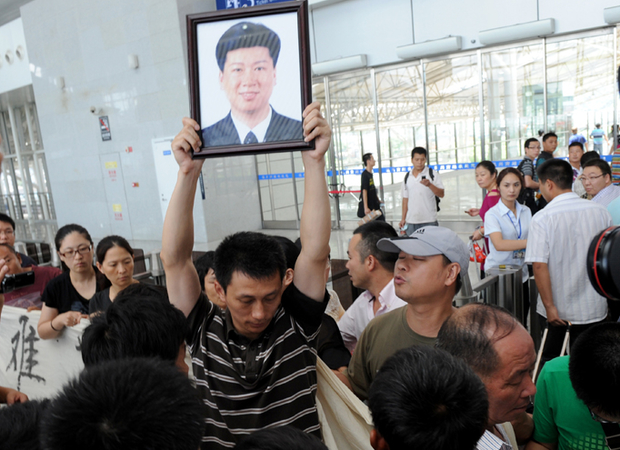
Long Ride for Justice
Lea Cao had his first inkling that something was wrong when he got a long-distance phone call from relatives in southeastern China.His family members in Fuzhou phoned Cao in New York to say that his parents and brother had failed to arrive at the...
ChinaFile Recommends
09.06.12Romney’s Young ‘China’ Hand
Forbes
Mitt Romney’s old China hand is more young than old, more Taiwan than China.Lanhee Chen, 34, is Romney’s policy wonk and one of Romney’s brains on China policy. The California born policy director for the Romney campaign said that when it...
ChinaFile Recommends
09.06.12News Flash: Washington Source of All Beijing’s Problems
Council on Foreign Relations
U.S. Secretary of State Hillary Clinton’s swing through Asia has been marked by a revelation in Beijing: the source of all China’s problems with its neighbors is the United States. A Xinhua editorial paints the United States as a “sneaky trouble...
ChinaFile Recommends
09.05.12Remarks from Hillary Clinton and Chinese Foreign Minister Yang Jiechi
Council on Foreign Relations
As I have said before, our two nations are trying to do something that has never been done in history, which is to write a new answer to the question of what happens when an established power and a rising power meet. Both President Obama and I have...
ChinaFile Recommends
09.05.12Chinese Writer on Honest, Generous, “Foolish” Americans
I’ve already been in the U.S. for a long time. I regret that choice. We’ve been [fooled] by Western media the whole time, making us think that the U.S. is a modernized country. Harboring hopes of studying American modern science in order to serve my...
ChinaFile Recommends
09.05.12To Chinese, Obama and Romney Aren’t So Different
Bloomberg
Republican presidential candidate Mitt Romney’s promise to get tough with China may fall on receptive ears in the U.S., but in China his vow has barely registered, much less caused alarm. Unlike in 2008, when the Chinese media and bloggers...
ChinaFile Recommends
08.31.12China's Greatest Challenge: Not America, But Itself
Diplomat
As China’s international profile continues to rise in tandem with its economic and political significance, one might conclude that the Chinese public is likely to expect Xi Jinping to carry a higher profile on the international stage. As the leader...
The NYRB China Archive
08.16.12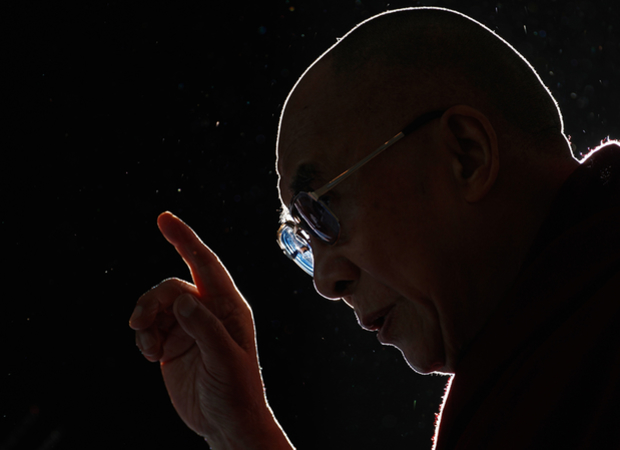
News from the Dalai Lama
from New York Review of Books
“I told President Obama the leaders of the Chinese Communist Party are missing a part of the brain, the part that contains common sense,” the Dalai Lama said to me during our conversation in London in mid-June.But it can be put back in. I am hopeful...
ChinaFile Recommends
08.14.122011 Foreign Policy Speech by Paul Ryan
Weekly Standard
Ryan also called for China to liberalize and become “integrated into the global order.” But, he said, Chinese leaders should not count on the decline of the United States as a great power. “We must demonstrate that planning for the post-American era...
ChinaFile Recommends
08.07.12The South China Sea: Troubled Waters
Economist
Long a zone of contention among a number of littoral states, the South China Sea is fast becoming the focus of one of the most serious bilateral disputes between America and China. Over the weekend China’s foreign ministry summoned an...
Reports
08.06.12
Chinese Leadership and Elite Responses to the U.S. Pacific Pivot
He Jianan
China Leadership Monitor
Over the past several years, the most significant overall U.S. foreign policy action of relevance to China has been the announcement and initial follow-through of the so-called Pacific pivot or “Rebalancing” of U.S. attention and resources to the...
ChinaFile Recommends
08.04.12Huawei: The Company That Spooked the World
Economist
BANBURY, a little English town best known for a walk-on part in a nursery rhyme and as the eponymous origin of a fruitcake, is an unlikely fulcrum for the balance of power in the world of telecoms. But the “Cyber Security Evaluation Centre” set up...
Out of School
08.03.12
The Rehabilitation of Pearl Buck
In the summer of 1934, Pearl Buck boarded a ship in Shanghai that was bound for America. She was forty-two years old, and had lived for thirty-four of those years in China, mostly in cities along the Yangzi River. Pearl and her first husband, John...
ChinaFile Recommends
07.26.12Chinese Maker of Olympic Uniforms Baffled by Backlash
Los Angeles Times
If Horatio Alger had spoken Mandarin he would have loved the rags-to-riches tale of garment maker Li Guilian. Chinese President Hu Jintao and fellow Politburo members are loyal customers of her firm,...
ChinaFile Recommends
07.23.12Chinese Students Living in Fear in the USA
Danwei
While there are certainly plenty of Chinese students overseas who are spoiled brats, often called ‘second generation rich’ and ‘second generation officials’ (fu erdai and guan erdai) who live off the fruits of their parents’ corruption or enterprise...
ChinaFile Recommends
07.21.12It's Time to Redefine the China Expert
Misrepresentations and misunderstandings of “China” is a complicated issue that won’t disappear overnight. The news media you have trusted doesn’t always give you an unbiased perspective, even though they have been trying their best. Even visiting...
ChinaFile Recommends
07.18.12The Chinese Media Reciprocity Act and Censorship of Foreign Journalists in China (Pt. 2)
China Law & Policy
Putting aside the shrill rhetoric surrounding the Chinese Media Reciprocity Act and the fact that it only deals with the harassment of a small segment of U.S. journalists in China (the VOA and RFA reporters), the Act does draw attention to an...
ChinaFile Recommends
07.18.12What is Wrong With the Chinese Media Reciprocity Act (Pt. 1 of 3)
China Law & Policy
The Chinese Media Reciprocity Act attempts to combat China’s restrictive visa policies for U.S. government-employed journalists. In reality, the impact of the Chinese Media Reciprocity Act is anything but reciprocal. The U.S. has two...
ChinaFile Recommends
07.16.12China Commentary Says U.S. Uniform Row Olympic "Blasphemy"
Reuters
An uproar over the U.S. Olympic team's made-in-China uniforms is a blasphemy on the Olympic spirit which is supposed to separate sports from politics and a show of pure ignorance to boot, China's official Xinhua news agency said on Monday.
ChinaFile Recommends
07.13.12The China Bashing Syndrome
Economist
IT IS a truth universally acknowledged that a man in possession of a major American political party’s presidential nomination must be in want of a more assertive policy on China. Bill Clinton upbraided George Bush senior for “coddling dictators”; Mr...
Sinica Podcast
07.13.12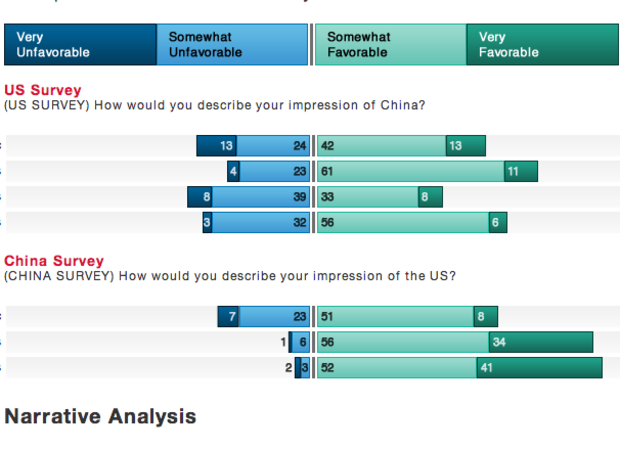
Sino-American Perceptions
from Sinica Podcast
This week on Sinica, Kaiser Kuo is joined by two guests from the Committee of 100, an organization formed over twenty years ago by I.M. Pei and other prominent Chinese-Americans to address issues in the Sino-American relationship. The Committee...
Books
07.10.12
China’s Wings
From the acclaimed author of Enduring Patagonia comes a dazzling tale of aerial adventure set against the roiling backdrop of war in Asia. The incredible real-life saga of the flying band of brothers who opened the skies over China in the years leading up to World War II—and boldly safeguarded them during that conflict—China’s Wings is one of the most exhilarating untold chapters in the annals of flight. Drawing on meticulous research, primary sources, and extensive personal interviews with participants, Gregory Crouch offers harrowing accounts of brutal bombing runs and heroic evacuations, as the fight to keep one airline flying becomes part of the larger struggle for China’s survival. He plunges us into a world of perilous night flights, emergency water landings, and the constant threat of predatory Japanese warplanes. When Japanese forces capture Burma and blockade China’s only overland supply route, Bond and his pilots must battle shortages of airplanes, personnel, and spare parts to airlift supplies over an untried five-hundred-mile-long aerial gauntlet high above the Himalayas—the infamous “Hump”—pioneering one of the most celebrated endeavors in aviation history.A hero’s-eye view of history in the grand tradition of Lynne Olson’s Citizens of London, China’s Wings takes readers on a mesmerizing journey to a time and place that reshaped the modern world. —Bantam
ChinaFile Recommends
06.28.12A World War II Story That China Would Like You to Hear
Atlantic
On May 6, 1944, U.S. army pilot Glen Beneda of the Flying Tigers was shot at by Japanese fighters while flying a combat mission over China. His plane caught fire, he ejected, and minutes later he landed in a rice paddy, frightening a group of...
ChinaFile Recommends
06.28.12Hillary Clinton’s Last Tour As Rock Star
New York Times
(With a blow-by-blow of the Cheng Guangcheng negotiations.) On May 3, the day after an artful deal to end the diplomatic crisis over Chen Guangcheng, China’s now-famous dissident, unraveled spectacularly, Hillary Rodham Clinton followed a scrum of...
ChinaFile Recommends
06.28.12Explaining the U.S. Healthcare Debate in China
New Yorker
The farther away one stands from the Obamacare cases, the more curious they look against the portrait we usually imagine of ourselves. By now, America’s declining place in rankings of global health is so well known at home that it has lost its...
Reports
06.25.12
U.S.-China Public Perceptions Opinion Survey 2012
Committee of 100
The re-establishment of U.S.-China relations in 1971 marked a strategic step that ended China’s isolation and transformed the global balance of power. Since that historic milestone, the United States as an established superpower and China as an...