


Reports
04.21.10
What’s the Difference?—Comparing U.S. and Chinese Trade Data
Peony Lui
Congressional Research Service
There is a large and growing difference between the official trade statistics released by the United States and the People’s Republic of China. According to the United States, the 2009 bilateral trade deficit with China was $226.8 billion. According...
Reports
04.15.10
East Asian Regional Architecture: New Economic and Security Arrangements and U.S. Policy
Peony Lui
Congressional Research Service
The global financial crisis, the end of the Cold War, the rise of China, globalization, free trade agreements, the war on terror, and an institutional approach to keeping the peace are causing dramatic shifts in relationships among countries in East...
Sinica Podcast
04.09.10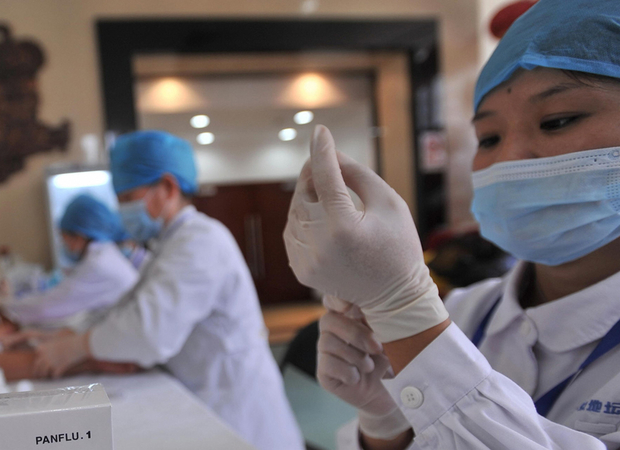
Iran and the Vaccination Scandal
from Sinica Podcast
Welcome back to the Sinica Podcast, a roundtable on current affairs in China featuring China-watchers from a wide range of backgrounds. In this week’s installment, host Kaiser Kuo talks about China’s delicate maneuvering in the Middle East, as well...
Books
04.01.10
Socialist Insecurity
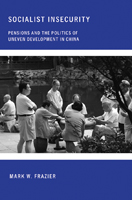
Over the past two decades, China has rapidly increased its spending on its public pension programs, to the point that pension funding is one of the government's largest expenditures. Despite this, only about fifty million citizens—one-third of the country's population above the age of sixty—receive pensions. Combined with the growing and increasingly violent unrest over inequalities brought about by China's reform model, the escalating costs of an aging society have brought the Chinese political leadership to a critical juncture in its economic and social policies.In Socialist Insecurity, Mark W. Frazier explores pension policy in the People's Republic of China, arguing that the government's push to expand pension and health insurance coverage to urban residents and rural migrants has not reduced, but rather reproduced, economic inequalities. He explains this apparent paradox by analyzing the decisions of the political actors responsible for pension reform: urban officials and state-owned enterprise managers. Frazier shows that China's highly decentralized pension administration both encourages the "grabbing hand" of local officials to collect large amounts of pension and other social insurance revenue and compels redistribution of these revenues to urban pensioners, a crucial political constituency.More broadly, Socialist Insecurity shows that the inequalities of welfare policy put China in the same quandary as other large uneven developers—countries that have succeeded in achieving rapid growth but with growing economic inequalities. While most explanations of the formation and expansion of welfare states are derived from experience in today's mature welfare systems, developing countries such as China, Frazier argues, provide new terrain to explore how welfare programs evolve, who drives the process, and who sees the greatest benefit. —Cornell University Press
Books
04.01.10
Chinese Politics
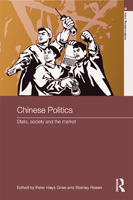
Written by a team of leading China scholars, this text interrogates the dynamics of state power and legitimation in 21st-century China. Despite the continuing economic successes and rising international prestige of China there has been increasing social protests over corruption, land seizures, environmental concerns, and homeowner movements. Such political contestation presents an opportunity to explore the changes occurring in China today—what are the goals of political contestation, how are Chinese Communist Party leaders legitimizing their rule, who are the specific actors involved in contesting state legitimacy today and what are the implications of changing state-society relations for the future viability of the People’s Republic? —Routledge
Books
04.01.10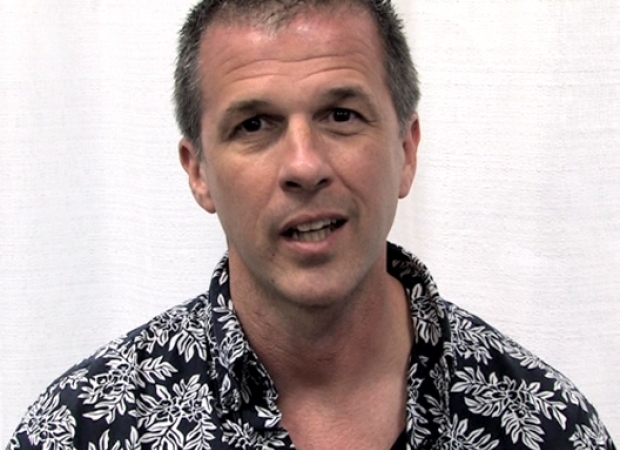
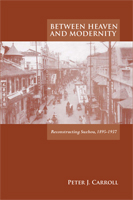
Between Heaven and Modernity
Combining social, political, and cultural history, this book examines the contestation over space, history, and power in the late Qing and Republican-era reconstruction of the ancient capital of Suzhou as a modern city. Located fifty miles west of Shanghai, Suzhou has been celebrated throughout Asia as a cynosure of Chinese urbanity and economic plenty for a thousand years. With the city's 1895 opening as a treaty port, businessmen and state officials began to draw on Western urban planning in order to bolster Chinese political and economic power against Japanese encroachment. As a result, both Suzhou as a whole and individual components of the cityscape developed new significance according to a calculus of commerce and nationalism. Japanese monks and travelers, Chinese officials, local people, and others competed to claim Suzhou’s streets, state institutions, historic monuments, and temples, and thereby to define the course of Suzhou’s and greater China’s modernity. —Stanford University Press
Books
04.01.10
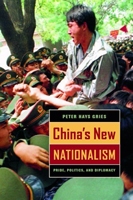
China’s New Nationalism
Three American missiles hit the Chinese embassy in Belgrade, and what Americans view as an appalling and tragic mistake, many Chinese see as a "barbaric" and intentional "criminal act," the latest in a long series of Western aggressions against China. In this book, Peter Hays Gries explores the roles of perception and sentiment in the growth of popular nationalism in China. At a time when the direction of China's foreign and domestic policies have profound ramifications worldwide, Gries offers a rare, in-depth look at the nature of China's new nationalism, particularly as it involves Sino-American and Sino-Japanese relations—two bilateral relations that carry extraordinary implications for peace and stability in the twenty-first century. Through recent Chinese books and magazines, movies, television shows, posters, and cartoons, Gries traces the emergence of this new nationalism. Anti-Western sentiment, once created and encouraged by China's ruling PRC, has been taken up independently by a new generation of Chinese. Deeply rooted in narratives about past "humiliations" at the hands of the West and impassioned notions of Chinese identity, popular nationalism is now undermining the Communist Party's monopoly on political discourse, threatening the regime's stability. As readable as it is closely researched and reasoned, this timely book analyzes the impact that popular nationalism will have on twenty-first century China and the world. —University of California Press
Reports
02.17.10
The Iran Nuclear Issue: The View from Beijing
International Crisis Group
The revelation in 2009 of nuclear facilities near Qom intensified international criticism of Iran’s opaque nuclear development. As Western countries prepare to pursue tougher sanctions at the U.N., China’s acquiescence as a permanent Security...
The NYRB China Archive
02.17.10Locked Out: Beijing’s Border Abuse Exposed
from New York Review of Books
On February 12, Chinese human rights campaigner Feng Zhenghu was allowed to return to Shanghai after a 92-day stay in diplomatic limbo at the Tokyo Narita airport. Having left China last April to visit family in Japan, Feng, who is a Chinese citizen...
Reports
02.04.10
The 2009 Asia Pacific Economic Cooperation (APEC) Meetings and U.S. Trade Policy in Asia
Peony Lui
Congressional Research Service
Congress and the Executive Branch have historically identified the Asia Pacific Economic Cooperation forum (APEC) as potentially important in the promotion of liberalized international trade and investment in Asia, and possibly the rest of the world...
The NYRB China Archive
01.27.10What Beijing Fears Most
from New York Review of Books
On December 29, four days after being sentenced to eleven years in prison for “subversion of state power,” the Chinese writer Liu Xiaobo filed an appeal to a higher court. For many familiar with the Chinese regime, the decision seemed quixotic: it...
Reports
01.22.10
China-North Korea Relations
Peony Lui
Congressional Research Service
The People’s Republic of China (PRC) plays a key role in U.S. policy toward the Democratic People’s Republic of Korea (DPRK or North Korea). The PRC is North Korea’s closest ally, largest provider of food, fuel, and industrial machinery, and...
Reports
01.06.10
U.S.-China Counterterrorism Cooperation: Issues for U.S. Policy
Peony Lui
Congressional Research Service
After the terrorist attacks on September 11, 2001, the United States faced a challenge in enlisting the full support of the People’s Republic of China (PRC) in the counterterrorism fight against Al Qaeda. This effort raised short-term policy issues...
Reports
01.01.10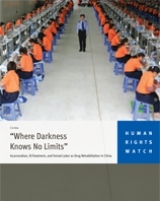
“Where Darkness Knows No Limits”: Incarceration, Ill-Treatment, and Forced Labor as Drug Rehabilitation in China
Sara Segal-Williams
Human Rights Watch
Based on research in Yunnan and Guangxi provinces, this report documents how China's June 2008 Anti-Drug Law compounds the health risks of suspected illicit drug users by allowing government officials and security forces to incarcerate them for...
The NYRB China Archive
12.21.09The Trial of Liu Xiaobo: A Citizens’ Manifesto and a Chinese Crackdown
from New York Review of Books
One year ago, the Chinese literary critic and political commentator Liu Xiaobo was taken away from his home in Beijing by the Chinese police, who held him without charge for six months, then placed him under formal arrest for six more months, on the...
Reports
12.11.09
China’s Economic Conditions
Peony Lui
Congressional Research Service
Since the initiation of economic reforms and trade liberalization thirty years ago, China has been one of the world’s fastest-growing economies and has emerged as a major economic and trade power. The combination of large trade surpluses, FDI flows...
The NYRB China Archive
12.07.09Copenhagen: China’s Oppressive Climate
from New York Review of Books
As the UN’s Climate Change Conference opens in Copenhagen this week, much attention will focus on China and the United States, who are, by a wide margin, the world’s two leading emitters of greenhouse gases. The success of the conference will depend...
Reports
12.07.09
China’s Currency: A Summary of the Economic Issues
Peony Lui
Congressional Research Service
Some Members of Congress charge that China’s policy of accumulating foreign reserves (especially U.S. dollars) to influence the value of its currency constitutes a form of currency manipulation intended to make its exports cheaper and imports into...
Reports
11.25.09
China’s Assistance and Government-Sponsored Investment Activities in Africa, Latin America, and Southeast Asia
Peony Lui
Congressional Research Service
In recent years, the People’s Republic of China (PRC) has bolstered its diplomatic presence and garnered international goodwill in the developing world through financing infrastructure and natural resource development projects, assisting in the...
Reports
11.20.09
China-U.S. Relations: Current Issues and Implications for U.S. Policy
Peony Lui
Congressional Research Service
The bilateral relationship between the U.S. and the People’s Republic of China (PRC) is vitally important, touching on a wide range of areas including, among others, economic policy, security, foreign relations, and human rights. U.S. interests with...
The NYRB China Archive
11.19.09China: The Fragile Superpower
from New York Review of Books
Some China watchers believe that China’s dramatically rising prosperity will inevitably make the country more open and democratic. President Barack Obama’s highly-scripted trip this week provided little to support that claim. As The Washington Post...
Reports
11.02.09
Shades of Red: China’s Debate Over North Korea
International Crisis Group
North Korea has created a number of foreign policy dilemmas for China. The latest round of provocations makes Beijing’s balancing act between supporting a traditional ally and responding to its dangerous brinkmanship more difficult, especially when...
Reports
11.01.09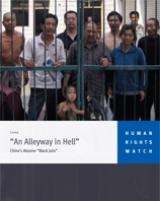
“An Alleyway in Hell”: China’s Abusive “Black Jails’
Human Rights Watch
Since 2003, large numbers of Chinese citizens have been held incommunicado for days or months in secret, unlawful detention facilities. These "black jails" are housed in state-owned hostels, hotels, nursing homes, and psychiatric hospitals...
The NYRB China Archive
10.21.09Obama’s Bad Bargain with Beijing
from New York Review of Books
As the echoes of China’s spectacular military parade on October 1 were subsiding, officials in the Obama administration, in quieter settings in Washington, D.C., were telling representatives of the Dalai Lama that the president was not going to meet...
The NYRB China Archive
10.07.09China at 60: Who Owns the Guns
from New York Review of Books
The most striking feature of China’s October 1 celebration of sixty years of Communist rule was the spectacular and tightly choreographed military parade in the center of Beijing. The display of crass militarism—paralleled only by parades in...
Reports
10.01.09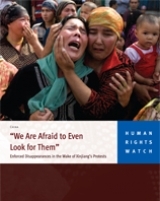
“We Are Afraid to Even Look for Them”: Enforced Disappearances in the Wake of Xinjiang’s Protests
Human Rights Watch
In the aftermath of the July 2009 protests in Xinjiang province, which according to the Chinese government killed at least 197 people, Chinese security forces detained hundreds of people on suspicion of participating in the unrest. Dozens of these...
Reports
07.16.09
East Asia’s Foreign Exchange Rate Policies
Peony Lui
Congressional Research Service
Financial authorities in East Asia have adopted a variety of foreign exchange rate policies, ranging from Hong Kong’s currency board system which links the Hong Kong dollar to the U.S. dollar, to the “independently floating” exchange rates of Japan...
Reports
07.13.09
Human Rights in China: Trends and Policy Implications
Peony Lui
Congressional Research Service
Human rights has been a principal area of U.S. concern in its relations with the People’s Republic of China (PRC), particularly since the violent government crackdown on the Tiananmen democracy movement in 1989. Some policy makers contend that the U...
The NYRB China Archive
07.02.09China’s Dictators at Work: The Secret Story
from New York Review of Books
Prisoner of the State is the secretly recorded memoir of Zhao Ziyang, once holder of China’s two highest Party and state positions and the architect of the economic reforms that have brought the country to the edge of great-power status. The book...
Reports
06.04.09
Taiwan’s Political Status: Historical Background and Ongoing Implications
Peony Lui
Congressional Research Service
In 1979, official U.S. relations with Taiwan (the Republic of China) became a casualty of the American decision to recognize the government of the People’s Republic of China (PRC) as China’s sole legitimate government. Since then, U.S. unofficial...
Reports
06.03.09
China and the Global Financial Crisis: Implications for the United States
Peony Lui
Congressional Research Service
Over the past several years, China has enjoyed one of the world’s fastest growing economies and has been a major contributor to world economic growth. However, the current global financial crisis threatens to significantly slow China’s economy...
Reports
04.24.09
U.S.-Funded Assistance Programs in China
Peony Lui
Congressional Research Service
U.S. government support of rule of law and civil society programs in the People’s Republic of China constitutes a key component of its efforts to promote democratic change in China. Other related U.S. activities include participation in official...
Reports
04.17.09
China’s Growing Role in U.N. Peacekeeping
International Crisis Group
Over the past twenty years China has become an active participant in U.N. peacekeeping, a development that will benefit the international community. Beijing has the capacity to expand its contributions further and should be encouraged to do so...
Reports
04.15.09
Village-by-Village Democracy in China
American Enterprise Institute for Public Policy Research
The NYRB China Archive
04.09.09‘A Hell on Earth’
from New York Review of Books
“The situation inside Tibet is almost like a military occupation,” I heard the Dalai Lama tell an interviewer last November, when I spent a week traveling with him across Japan. “Everywhere. Everywhere, fear, terror. I cannot remain indifferent.”...
Reports
04.02.09
Taiwan-U.S. Relations: Developments and Policy Implications
Peony Lui
Congressional Research Service
Policy toward and support for Taiwan are a key element in U.S. relations with the People’s Republic of China (PRC) and an important component of U.S. policy in Asia. Recently, pessimistic observers see growing PRC-Taiwan ties eroding U.S. influence...
Reports
03.31.09
Asia Pacfic Economic Cooperation (APEC) and the 2008 Meetings in Lima, Peru
Peony Lui
Congressional Research Service
Congress and the Executive Branch have historically identified the Asia Pacific Economic Cooperation (APEC) as an important organization to help promote the U.S. goal of liberalizing international trade and investment in Asia, and possibly the rest...
Reports
03.17.09
The Tibetan Policy Act of 2002: Background and Implementation
Peony Lui
Congressional Research Service
U.S. policy on Tibet is governed by the Tibetan Policy Act of 2002 (TPA), enacted as part of the Foreign Relations Authorization Act of FY2003 (P.L. 107-228). In addition to establishing a number of U.S. principles with respect to human rights,...
Reports
02.25.09
China’s Foreign Aid Activities in Africa, Latin America, and Southeast Asia
Peony Lui
Congressional Research Service
In the past several years, the People’s Republic of China (PRC) has bolstered its diplomatic presence and garnered international goodwill through its financing of infrastructure and natural resource development projects, assistance in the carrying...
Reports
02.13.09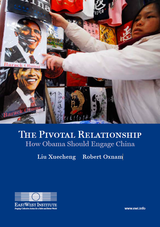
The Pivotal Relationship: How Obama Should Engage China
EastWest Institute
Providing their respective hopes and expectations on what they would like to see in the Obama administration’s China policy are Liu Xuecheng and Robert Oxnam, who both envision opportunities for reframing the China-U.S. relationship in a way that...
The NYRB China Archive
01.15.09China’s Charter 08
from New York Review of Books
The document below, signed by more than two thousand Chinese citizens, was conceived and written in conscious admiration of the founding of Charter 77 in Czechoslovakia, where, in January 1977, more than two hundred Czech and Slovak intellectuals...
Reports
01.07.09
Taiwan-U.S. Relations: Recent Developments and Their Policy Implications
Peony Lui
Congressional Research Service
U.S.-Taiwan relations have undergone important changes, sparked in part by the increasing complexity of Taiwan’s democratic political environment and the continued insistence of Beijing that the separately ruled Taiwan is a part of the People’s...
Reports
12.19.08
Sino-Japanese Relations: Issues for U.S. Policy
Peony Lui
Congressional Research Service
After a period of diplomatic rancor earlier this decade, Japan and China have demonstrably improved their bilateral relationship. The emerging detente includes breakthrough agreements on territorial disputes, various high-level exchanges, and...
Reports
10.08.08
U.S. Foreign Aid to East and South Asia: Selected Recipients
Peony Lui
Congressional Research Service
Since the war on terrorism began in 2001 and the Millennium Challenge Account (MCA) and Global HIV/AIDS Initiative (GHAI) were launched in 2004, the United States has increased foreign aid spending dramatically in some regions, including East and...
Reports
09.17.08
Taiwan: Overall Developments and Policy Issues in the 109th Congress
Peony Lui
Congressional Research Service
U.S. officials saw relations with Taiwan as especially troubled during the 109th Congress in 2005-2006, beset by the increasing complexity and unpredictability of Taiwan’s democratic political environment as well as by PRC actions underscoring...
Reports
08.24.08
Energy Interests and Alliances: China, America and Africa
EastWest Institute
According to conventional wisdom, the United States and China are locked in a high-stakes competition for energy resources around the world, particularly in Africa. Against the backdrop of highly volatile oil prices, mounting concerns about global...
The NYRB China Archive
08.14.08
China: Humiliation & the Olympics
from New York Review of Books
The IncidentOn a snowy winter day in 1991, Lu Gang, a slightly built Chinese scholar who had recently received his Ph.D. in plasma physics, walked into a seminar room at the University of Iowa’s Van Allen Hall, raised a snub-nose .38-caliber Taurus...
Reports
08.05.08
Taiwan: Recent Developments and U.S. Policy Choices
Peony Lui
Congressional Research Service
In a large turnout on March 22, 2008, voters in Taiwan elected as president Mr. Ma Ying-jeou of the Nationalist (KMT) Party. Mr. Ma out-polled rival candidate Frank Hsieh, of the pro-independence Democratic Progressive Party (DPP), by a 2.2 million...
Reports
07.01.08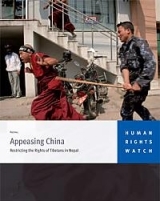
Appeasing China: Restricting the Rights of Tibetans in Nepal
Human Rights Watch
This report concerns human rights issues surrounding the suppression of Tibetan protesters in Nepal. Following a Chinese governmental crackdown in Tibet in 2008, many Tibetans in Nepal began to protest. Nepali authorities have harshly suppressed the...
Reports
07.01.08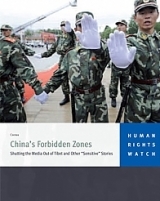
China’s Forbidden Zones: Shutting the Media out of Tibet and Other “Sensitive” Stories
Human Rights Watch
This report focuses on the treatment of foreign journalists by the Chinese government. In the buildup to the Beijing 2008 Olympics, the authors contend, the Chinese government has tried to force foreign journalists to avoid sensitive issues. As a...
Reports
06.30.08
Tibet: Problems, Prospects, and U.S. Policy
Peony Lui
Congressional Research Service
On March 10, 2008, a series of demonstrations began in Lhasa and other Tibetan regions of China to mark the 49th anniversary of an unsuccessful Tibetan uprising against Chinese rule in 1959. The demonstrations appeared to begin peacefully with small...
The NYRB China Archive
06.26.08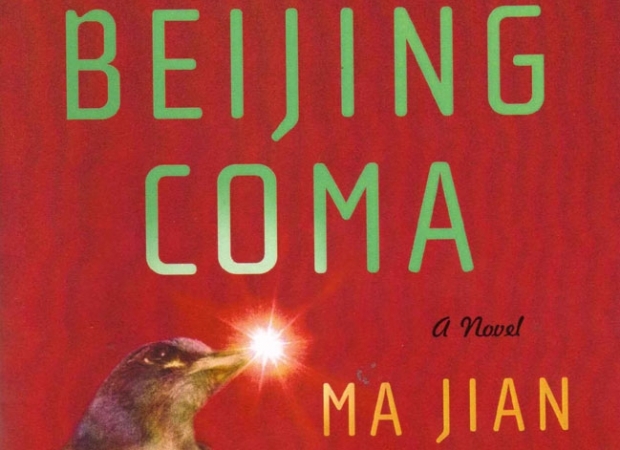
Casting a Lifeline
from New York Review of Books
Sixty pages or so into Ma Jian’s novel Beijing Coma, the hero, Dai Wei, is troubled by the memory of a harrowing anatomy lecture that he attended as a university student. Taught by “a celebrated cardiovascular specialist,” the class observed the...
Reports
06.01.08
Tibet Autonomous Region: Access Denied
Amnesty International
This report, written in the aftermath of the widespread Tibetan unrest in Tibet and Tibetan regions of China in the spring of 2008, addresses the Chinese government with immediate demands. In cracking down on unrest, the Chinese government sealed...
The NYRB China Archive
05.29.08Thunder from Tibet
from New York Review of Books
1.Every so often, between the time a book leaves its publisher and the time it reaches its readers, events occur that change the ways it can be read. Such is the case with Pico Iyer’s account of the fourteenth Dalai Lama, the exiled leader of Tibet...
Reports
05.21.08
China’s Space Program: Options for U.S.-China Cooperation
Peony Lui
Congressional Research Service
China has a determined, yet still modest, program of civilian space activities planned for the next decade. The potential for U.S.-China cooperation in space—an issue of interest to Congress—has become more controversial since the January 2007...
The NYRB China Archive
05.15.08Twelve Suggestions for Dealing with the Tibetan Situation, by Some Chinese Intellectuals
from New York Review of Books
At present the one-sided propaganda of the official Chinese media is having the effect of stirring up inter-ethnic animosity and aggravating an already tense situation. This is extremely detrimental to the long-term goal of safeguarding national...
Reports
05.14.08
China’s Protestants
American Enterprise Institute for Public Policy Research
The number of religious believers in China continues to grow almost exponentially, far outpacing population growth. Of the officially tolerated faiths, Christianity has grown at the fastest pace. As of 2005, Christians were approaching 5 percent of...
Reports
04.04.08
Security Implications of Taiwan’s Presidential Election of March 2008
Peony Lui
Congressional Research Service
Taiwan’s presidential election of March 22, 2008 indicates a reduction in future cross-strait tension, as winner Ma Ying-jeou is less provocative toward Beijing than Chen Shui-bian has been. The near-term outlook for Taiwan’s future is positive for...
The NYRB China Archive
04.03.08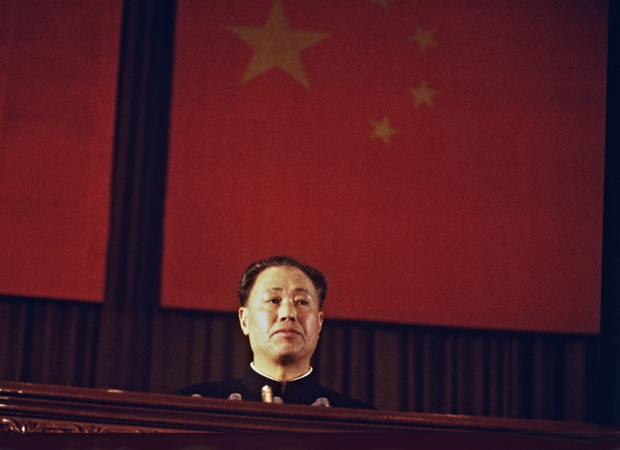
He Would Have Changed China
from New York Review of Books
In trying to make sense of their country’s turbulent modern history, Chinese intellectuals sometimes resort to counterfactual speculation. How might things have been different if one or another accidental event had happened differently? For decades...