


Reports
11.17.20
Meeting the China Challenge: A New American Strategy for Technology Competition
Asia Society
Is China or the U.S. ahead in artificial intelligence? What is the best way to counter security threats in 5G technology? How do we best maintain American leadership positions in fundamental research and biotechnology?
Reports
05.24.17
China’s Social Credit System: A Big-Data Enabled Approach to Market Regulation with Broad Implications for Doing Business in China
Mirjam Meissner
Mercator Institute for China Studies
Under the catchphrase “Social Credit System,” China is currently implementing a new and highly innovative approach to monitoring, rating, and regulating the behavior of market participants. The Social Credit System will have significant impact on...
Reports
02.07.17
U.S. Policy Toward China
Asia Society
The Task Force on U.S.-China Policy generated the following report and set of recommendations to assist the 45th U.S. presidential administration in formulating a China strategy that will protect and further U.S. national interests. This report...
Reports
01.01.17
Record Flows and Growing Imbalances
Mercator Institute for China Studies
Foreign direct investment (FDI) has become an increasingly important part of the E.U.-China economic relationship. European companies have invested hundreds of billions of euros into the Chinese economy since the 1980s, and have made big bets on...
Reports
11.30.16
Made in China 2025
Jost Wübbeke & Mirjam Meissner
Mercator Institute for China Studies
This report analyses China’s ambitious plan to build one of the world’s most advanced and competitive economies with the help of innovative manufacturing technologies (“smart manufacturing”). China’s industrial master plan “Made in China 2025” aims...
Reports
10.01.15
China’s Next Opportunity: Sustainable Economic Transition
Paulson Institute
China’s Beijing-Tianjin-Hebei region, also known as Jing-Jin-Ji, presents a compelling opportunity to highlight the potential—and the challenges—in transitioning to a more sustainable economic growth model. The Chinese government has prioritized the...
Reports
06.08.15
China’s “New Normal”: Structural Change, Better Growth, and Peak Emissions
American Enterprise Institute for Public Policy Research
China has grown rapidly—often at double-digit rates—for more than three decades by following a strategy of high investment, strong export orientation, and energy-intensive manufacturing. While this growth lifted hundreds of millions out of poverty,...
Reports
06.01.15
Demand-Driven Data: How Partner Countries are Gathering Chinese Development Cooperation Information
United Nations
As China becomes one of the major development partners and South-South cooperation (SSC) providers globally, there is increasing demand from partner countries for more information on China’s financial flows. China has been taking initiatives to...
Reports
06.01.15
Chinese FDI in Europe and Germany
Mercator Institute for China Studies
The authors have—on the basis of a unique transaction dataset—analyzed the newest trends of Chinese direct investment in Germany and the E.U. The study is able to clearly establish that the new wave of Chinese investment offers exceptional...
Reports
05.01.15
New Neighbors: Chinese Investment in the United States by Congressional District
National Committee on United States-China Relations
Foreign direct investment (FDI) is a vital component of the United States economy today and has been throughout the nation’s history. Investors from abroad are a source of growth, employment, competitiveness, and innovation, and their presence is...
Reports
04.09.15
Power Play: China’s Ultra High Voltage Technology and Global Standards
Paulson Institute
As a matter of government policy and corporate strategy, China has been intensifying its effort to set indigenous standards for homegrown ultra-high voltage (UHV) transmission technology. The country also aims to contribute to UHV standards...
Reports
04.01.15
Can Fracking Green China’s Growth?
Overseas Development Institute
This paper analyses the best available technical, scientific, and engineering literature on the risks and opportunities posed by shale gas, and also what policy environment could maximise the opportunity and minimise the risk. It also analyses China...
Reports
04.01.15
U.S.-China 21: The Future of U.S.-China Relations Under Xi Jinping
Harvard University
We are, therefore, seeing the emergence of an asymmetric world in which the fulcrums of economic and military power are no longer co-located, but, in fact, are beginning to diverge significantly. Political power, through the agency of foreign policy...
Reports
03.31.15
Navigating Choppy Waters
Center for Strategic and International Studies (CSIS)
China faces increasing economic headwinds that call into question not only its near-term growth outlook but the longer-term sustainability of its economic success. At a time of leadership transition in Beijing, global markets and policymakers alike...
Reports
02.25.15
Double Impact
Paulson Institute
This paper makes the case for establishing a national CO2 price in China as soon as possible. End-of-pipe pollution control technologies—a core component of China’s Air Pollution Action Plan (APAP)—can address local air pollution but not CO2...
Reports
01.06.15
Rebalancing China’s Energy Strategy
Paulson Institute
At a high-level meeting of China’s top finance and economics body in June 2014, President Xi Jinping called for a sweeping energy revolution in China, centered on five areas: demand, production, technology, institutional governance, and global...
Reports
10.20.14
The Long Soft Fall in Chinese Growth
David Hoffman
The Conference Board
As recently as the fourth quarter of 2013, there were few detractors from an optimistic assessment of China’s prospects to achieve a “soft landing” and continue to enjoy relatively stable growth in the 7 to 8 percent range for the next 10 years and...
Reports
10.01.14
Avoiding the Blind Alley: China’s Economic Overhaul and Its Global Implications
Daniel H. Rosen
Asia Society
President Xi Jinping announced a sweeping overhaul for China’s economy in November 2013, with pledges to make market forces decisive, treat homegrown and foreign investors with the same laws and regulations, and change the mission statement of the...
Reports
06.01.14
Decoding China’s Emerging “Great Power” Strategy in Asia
Center for Strategic and International Studies (CSIS)
The course charted by China’s reemergence as a great power over the next few decades represents the primary strategic challenge for the U.S.-Japan security alliance and for the East Asian security landscape writ large. If China’s economic, military...
Reports
04.01.14
High Tech: The Next Wave of Chinese Investment in America
Asia Society
In this report, we explore the advent of Chinese investment in U.S. high-tech sectors in order to provide an objective starting point for debate about this nascent trend. We use a unique dataset on Chinese FDI transactions in the United States to...
Reports
10.10.13
Congressional-Executive Commission on China: 2013 Annual Report
United States Congress
The Commission notes China’s lack of progress in guaranteeing Chinese citizens’ freedom of expression, assembly, and religion; restraining the power of the Chinese Communist Party; and establishing the rule of law under the new leadership of...
Reports
10.01.13
China’s Absorptive State
Nesta
A great deal of speculation surrounds China’s prospects in science and innovation, as with other aspects of China’s development and heightened visibility on the global stage. The same pitfalls—of hype, generalization, and only partial awareness of...
Reports
08.27.13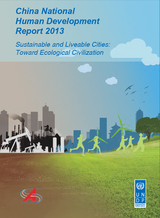
China National Human Development Report 2013
United Nations
China had more urban than rural residents for the first time in 2011. The urbanization rate reached 52.6 percent in 2012, a major milestone with significant implications. In the midst of this urban transformation, China’s leaders have increasingly...
Reports
07.09.13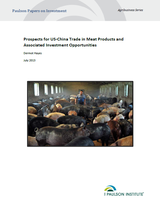
Prospects for U.S.-China Trade in Meat Products and Associated Investment Opportunities
Paulson Institute
The rapid growth rate in per capita disposable income in China, coupled with a continued migration of hundreds of millions of new consumers to urban areas, has created challenges for the Chinese crop and livestock sectors. Faced with an increase in...
Reports
06.03.13
Obama’s Meeting with China’s Communist Party General Secretary Xi Jinping
The Heritage Foundation
President Obama and the general secretary of the Chinese Communist Party, Xi Jinping, will meet June 7–8 in California. The meeting has been characterized as a way for the two to establish a personal relationship and build trust. This would all be...
Reports
06.01.13
Inequality in China
World Bank
This paper provides an overview of research on income inequality in China over the period of economic reform. It presents the results of two main sources of evidence on income inequality and, assisted by various decompositions, explains the reasons...
Reports
05.01.13
A Changing China: Implications for Developing Countries
World Bank
Three decades of rapid growth and structural change have transformed China into an upper-middle-income country and global economic powerhouse. China's transformations over this period wielded increasing influence over the development path of...
Reports
03.29.13
China’s Path to Consumer-Based Growth
Luo Xiaoyuan
International Monetary Fund (IMF)
This paper proposes a possible framework for identifying excessive investment. Based on this method, it finds evidence that some types of investment are becoming excessive in China, particularly in inland provinces. In these regions, private...
Reports
03.28.13
China’s Demography and its Implications
Luo Xiaoyuan
International Monetary Fund (IMF)
In coming decades, China will undergo a notable demographic transformation, with its old-age dependency ratio doubling to 24 percent by 2030 and rising even more precipitously thereafter. This paper uses the permanent income hypothesis to reassess...
Reports
03.27.13
How Effective are Macroprudential Policies in China?
Luo Xiaoyuan
International Monetary Fund (IMF)
This paper investigates macroprudential policies and their role in containing systemic risk in China. It shows that China faces systemic risk in both the time (procyclicality) and cross-sectional (contagion) dimensions. The former is reflected as...
Reports
03.27.13
China 2030: Building a Modern, Harmonious, and Creative Society
World Bank
Can China’s growth rate still be among the highest in the world even if it slows from its current pace? And can it maintain this rapid growth with little disruption to the world, the environment, and the fabric of its own society? This report...
Reports
03.07.13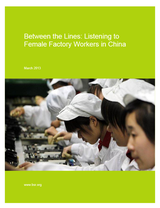
Between the Lines: Listening to Female Factory Workers in China
BSR
Women are crucial to China’s manufacturing sector. While women comprise more than 44% of the overall workforce, they represent about 60% of workers who migrate from rural areas to cities to work in factories. These female workers are diverse, with...
Reports
02.27.13
China’s Central Asia Problem
International Crisis Group
Since the collapse of the Soviet Union, China and its Central Asian neighbors have developed a close relationship, initially economic but increasingly also political and security. Energy, precious metals, and other natural resources flow into China...
Reports
11.27.12
Is China Over-Investing and Does it Matter?
Luo Xiaoyuan
International Monetary Fund (IMF)
Now close to 50 percent of GDP, this paper assesses the appropriateness of China’s current investment levels. It finds that China’s capital-to-output ratio is within the range of other emerging markets, but its economic growth rates stand out,...
Reports
11.06.12
Investment-Led Growth in China: Global Spillovers
Luo Xiaoyuan
International Monetary Fund (IMF)
Over the past decade, China’s growth model has become more reliant on investment and its footprint in global imports has widened substantially. Several economies within China’s supply chain are increasingly exposed to its investment-led growth and...
Reports
11.05.12
The Spillover Effects of a Downturn in China’s Real Estate Investment
Luo Xiaoyuan
International Monetary Fund (IMF)
Real estate investment accounts for a quarter of total fixed asset investment (FAI) in China. The real estate sector’s extensive industrial and financial linkages make it a special type of economic activity, especially where the credit creation...
Reports
10.12.12
Chinese Direct Investment in California
Daniel H. Rosen
Asia Society
To build the case for a robust response to these opportunities and looming risks, this report analyzes Chinese investment in California in depth, mining a unique database for insights about California’s comparative advantages, the Chinese firms most...
Reports
08.27.12
The China Toll
Economic Policy Institute
Since China entered the World Trade Organization in 2001, the extraordinary growth of trade between China and the United States has had a dramatic effect on U.S. workers and the domestic economy, though in neither case has this effect been...
Reports
08.06.12
Shaping the Future—Part I: Domestic Developments in Taiwan
He Jianan
China Leadership Monitor
Three main themes emerged in Taiwan politics in the wake of President Ma Ying-jeou’s convincing reelection victory in January. First, in a highly contentious election that portended continuing intra-party strife, the DPP chose its new chairman,...
Reports
08.06.12
Economic Uncertainty Fuels Political Misgivings
He Jianan
China Leadership Monitor
Political uncertainty is inevitable as China prepares for this fall’s leadership transition. This year economic conditions are also unusually unpredictable. In particular, while China is undergoing an inevitable economic slowdown, few have a clear...