


Environment
10.23.14
Tibetan Plateau Faces Massive ‘Ecosystem Shift’
from chinadialogue
Large areas of grasslands, alpine meadows, wetlands, and permafrost will disappear on the Tibetan plateau by 2050, with serious implications for environmental security in China and South Asia, a research paper published by scientists at the Kunming...
ChinaFile Recommends
10.21.14Presumed Guilty in China’s War on Corruption, Targets Suffer Abuses
New York Times
One beating left Wang Guanglong, a midlevel official from China’s Fujian Province, partly deaf, according to his later testimony.
ChinaFile Recommends
10.21.14Thomas Sauvin’s Beijing Silvermine
New Yorker
Thomas Sauvin estimates that he has sifted through more than half a million images, taken by ordinary citizens, between 1985 and the early aughts, that depict everyday life, leisure, and travel, both in China and abroad.
ChinaFile Recommends
10.21.14China, U.S. Working to Ensure Positive Results from Obama's Upcoming China Visit: Senior Chinese Official
Xinhua
Chinese State Councillor Yang Jiechi saluted "new and positive progress" that has been made in various aspects of the China-U.S. ties since last year's summit held by Obama and Chinese President Xi Jinping in California.
Viewpoint
10.21.14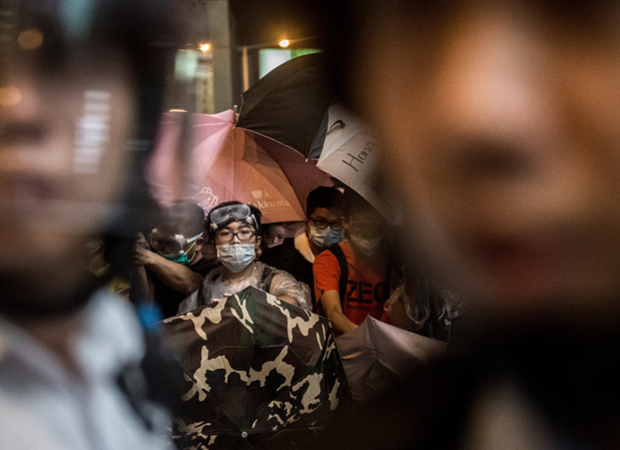
‘We Can Only Trust Each Other and Keep the Road’
Snip. Snip. Snip. The officer’s face shows concentration as he cuts one yellow ribbon after another along a metal fence on Queensway in the Central district of Hong Kong. Next to him, other policemen have just finished dismantling the barricades...
Sinica Podcast
10.17.14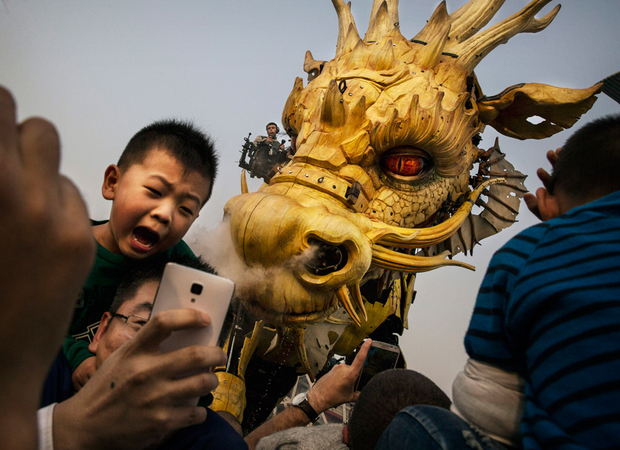
China Daddy Issues
from Sinica Podcast
We’ve all heard about the difficulty of finding good schools in China, and know first hand about the food and air safety problems. But what about the terrors of pedestrian crossings, the dilemmas of how much trust you should inculcate in your kids,...
Books
10.15.14
China’s Super Consumers
China has transformed itself from a feudal economy in the 19th century, to Mao and Communism in the 20th century, to the largest consumer market in the world by the early 21st century. China's Super Consumers explores the extraordinary birth of consumerism in China and explains who these super consumers are. China's Super Consumers offers an in-depth explanation of what's inside the minds of Chinese consumers and explores what they buy, where they buy, how they buy, and most importantly why they buy.The book is filled with real-world stories of the foreign and domestic companies, leading brands, and top executives who have succeeded in selling to this burgeoning marketplace. This remarkable book also takes you inside the boardrooms of the people who understand Chinese consumers and have had success in the Chinese market.A hands-on resource for succeeding in the Chinese marketplaceFilled with real-world stories of companies who have made an impact in ChinaDiscover what the Chinese consumer wants and how to deliver the goodsThis book is an invaluable resource for anyone who wants a clear understanding of how China's Super Consumers are changing the world and how to sell to them. —Wiley {chop}
ChinaFile Recommends
10.14.14‘People’s Democratic Dictatorship’ Wrongly Targeted
Global Times
A CPC-owned magazine published an article recently, saying it is wrong to negate or replace the people's democratic dictatorship with the rule of law.
ChinaFile Recommends
10.14.14Maid in Hong Kong Fights for Justice Against Abuser
Wall Street Journal
Maids from Indonesia and the Philippines are an indispensable part of the Hong Kong’s vibrant economy and society. But incidents of abuse often stay hidden from public view.
ChinaFile Recommends
10.14.14Cultural Reflection Can Improve Modern Governance
Xinhua
During the latest in a series of collective studies among the Political Bureau of the CPC Central Committee, Xi said the CPC should follow successful examples in Chinese history to learn from their merits and avoid shortcomings.
Caixin Media
10.14.14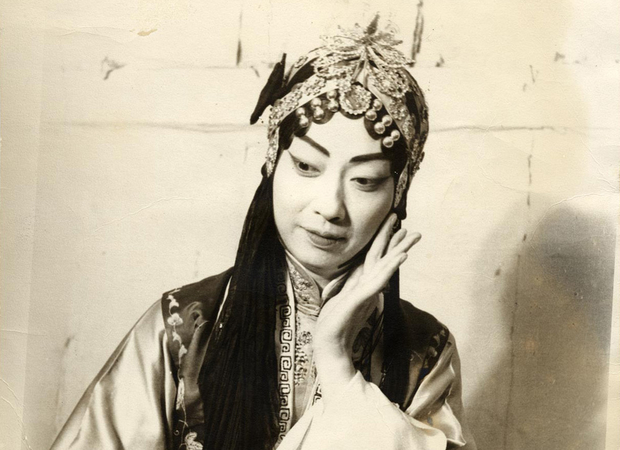
Sounds of Distinction
The Peking Opera star Mei Lanfang (1894-1961) is generally acknowledged to have been the greatest performer of female dan roles in the history of his art. He was also a renowned theatrical innovator whose performance style is carried on as the...
ChinaFile Recommends
10.10.14Chinese Media Accuse Japanese Manga Star Doraemon of Subverting Youth
Guardian
“Doraemon is a part of Japan’s efforts of exporting its national values and achieving its cultural strategy; this is an undisputed fact,” the local communist party newspaper Chengdu Daily said in an editorial.
Sinica Podcast
10.10.14
The Sounds of Old Beijing
from Sinica Podcast
This week on Sinica, Kaiser and Jeremy are joined by Colin Chinnery from the Beijing Sound History Project, a recording project that aims to preserve the distinctive clangs, songs, and shouts of traditional Beijing life. In addition to sampling some...
Viewpoint
10.08.14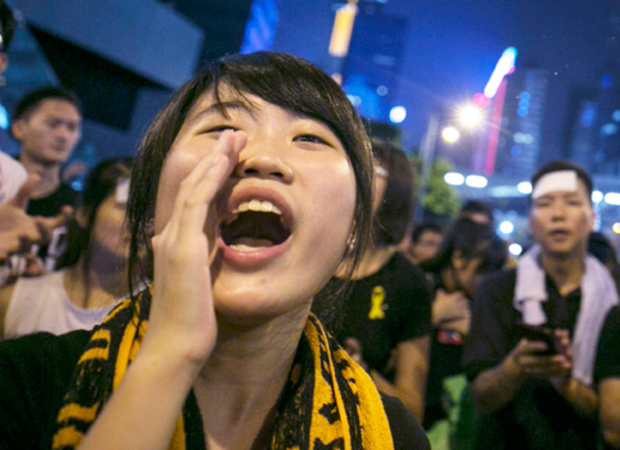
‘We Do Not Want to Be Persuaded’
Over the past week, it has been hard to make sense of the threats and ultimatums the Hong Kong protesters have faced. On Sunday, the South China Morning Post splashed on its front page that Hong Kong had “hours to avoid tragedy.” University deans...
ChinaFile Recommends
10.08.14China Detains Poet Wang Zang and 7 Others Ahead of Hong Kong Event
Huffington Post
On Sept. 30, Wang Zang had posted on Twitter a picture of himself raising his middle finger and holding an umbrella, a symbol of solidarity adopted by the protesters demanding open nominations for Hong Kong's chief executive.
ChinaFile Recommends
10.08.14China’s Soft-Power Fail
Bloomberg
This was not the reception that the Chinese government had in mind in 2004 when it inaugurated the Confucius Institute program as a means of improving its image abroad and projecting “soft power.”
ChinaFile Recommends
10.08.14The Kitchen Network
New Yorker
“Customers are here already!” the restaurant’s owner, a wiry Chinese man in his fifties, barked. He dropped a heavy container onto the metal counter with a crash. “How can you possibly be moving this slowly?”
ChinaFile Recommends
10.07.14Read the Anti-Hong Kong Rant That’s Going Viral in China
Foreign Policy
Hong Kong's real problem is that most people have no awareness of changing patterns of development, and thus are not psychologically prepared for economic restructuring.
ChinaFile Recommends
10.07.14China Removes 160,000 ‘Phantom Staff’ from Government Payroll
CNN
Hebei province in central China was the worst offender, with 55,793 officials found to be getting paid even though they never worked, followed by Sichuan and Henan.
ChinaFile Recommends
10.06.14Waldorf Astoria NY hotel sold to China’s Anbang for $1.95bn
Financial Times
The sale allows the companies to “finally maximise the full value of this iconic asset on a full city block in midtown Manhattan,” said Christopher Nassetta, chief executive of Hilton Worldwide.
ChinaFile Recommends
10.06.14Penn State Latest School to Drop China’s Confucius Institute
Wall Street Journal
The action signals increasing discontent on university campuses over the institutes' hiring practices and refusal to acknowledge unflattering chapters of Chinese history.
ChinaFile Recommends
10.06.14Great Job on the Railroad. Now Go Back to China.
New York Times
The narrative at the New-York Historical Society’s vigorous and imaginative new exhibition is not just of China’s impact on United States history or of the experiences and suffering of Chinese immigrants. It is how Chinese-American identity came to...
Sinica Podcast
10.03.14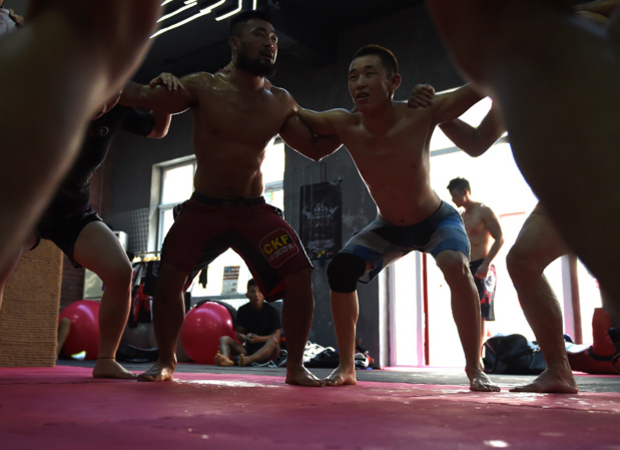
Chinese Martial Arts
from Sinica Podcast
This week on Sinica, Jeremy Goldkorn and David Moser are pleased to be joined by Sascha Matuszak, a Chengdu-based expert on Chinese martial arts and the producer of a new documentary on Chinese MMA (mixed martial arts), a competitive tournament...
Sinica Podcast
09.27.14
In Conversation with Mara Hvistendahl
from Sinica Podcast
Kaiser and Jeremy are joined this week by Mara Hvistendahl, Pulitzer Prize-nominated author and long-standing resident of Shanghai, to discuss her two main works. Along with discussing the twists and turns of her murder novel, And the City Swallowed...
Media
09.25.14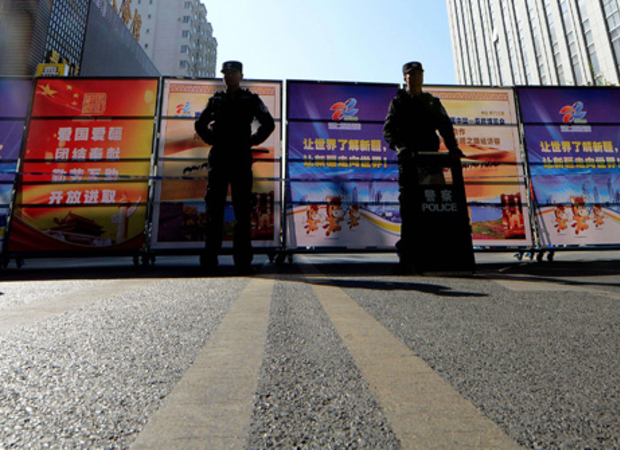
An Internet Where Nobody Says Anything
Here is what a court in Urumqi, the capital of China’s western Xinjiang region, concludes Ilham Tohti, a balding, thick-set, 44-year-old professor, did: “Using ‘Uighur Online’ as a platform, and taking advantage of his role as a university professor...
Viewpoint
09.25.14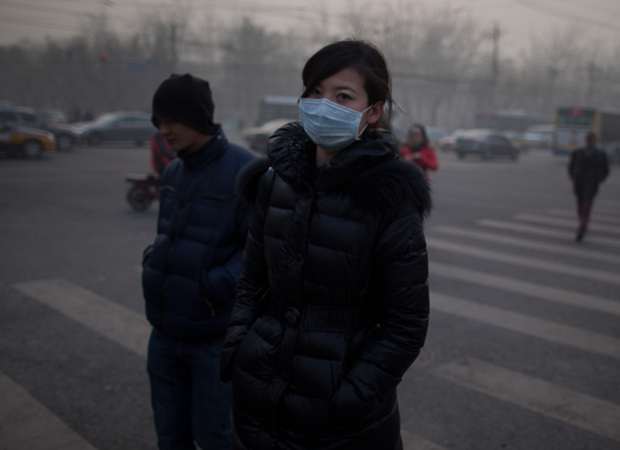
How Bad Does the Air Pollution Have to Be Before You’d Wear a Face Mask?
“Mommy, why don’t I wear a face mask?” asked my nine-year-old daughter Maggie nearly every day during the first few weeks of school. Two of her expat classmates had been in Beijing less than a year, but it seemed as if they wore theirs all the time...
Books
09.24.14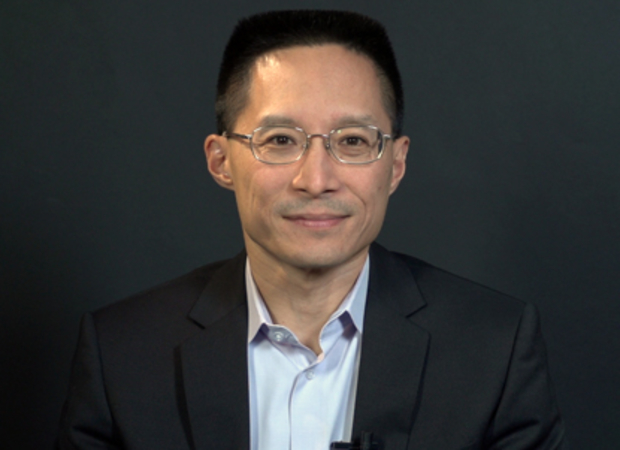
A Chinaman’s Chance
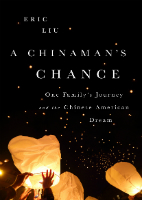
From Tony Hsieh to Amy Chua to Jeremy Lin, Chinese Americans are now arriving at the highest levels of American business, civic life, and culture. But what makes this story of immigrant ascent unique is that Chinese Americans are emerging at just the same moment when China has emerged—and indeed may displace America—at the center of the global scene. What does it mean to be Chinese American in this moment? And how does exploring that question alter our notions of just what an American is and will be? In many ways, Chinese Americans today are exemplars of the American Dream: during a crowded century and a half, this community has gone from indentured servitude, second-class status and outright exclusion to economic and social integration and achievement. But this narrative obscures too much: the Chinese Americans still left behind, the erosion of the American Dream in general, the emergence—perhaps—of a Chinese Dream, and how other Americans will look at their countrymen of Chinese descent if China and America ever become adversaries. As Chinese Americans reconcile competing beliefs about what constitutes success, virtue, power, and purpose, they hold a mirror up to their country in a time of deep flux. In searching, often personal essays that range from the meaning of Confucius to the role of Chinese Americans in shaping how we read the Constitution to why he hates the hyphen in "Chinese-American," Eric Liu pieces together a sense of the Chinese American identity in these auspicious years for both countries. He considers his own public career in American media and government; his daughter's efforts to hold and release aspects of her Chinese inheritance; and the still-recent history that made anyone Chinese in America seem foreign and disloyal until proven otherwise. Provocative, often playful but always thoughtful, Liu breaks down his vast subject into bite-sized chunks, along the way providing insights into universal matters: identity, nationalism, family, and more. —PublicAffairs {chop}
ChinaFile Recommends
09.23.14Alibaba Founder Jack Ma Tops China Rich List
BBC
E-commerce mogul Jack Ma has become China's richest person following Alibaba's record share listing, according to a wealth survey by the Hurun Report. Ma tops its annual rich list with a fortune of $25 billion.
ChinaFile Recommends
09.23.14China Increasingly Producing ‘Tools of Torture’ for Export: Amnesty
Reuters
The Chinese equipment, such as spiked batons, fuels human rights abuses by law enforcement authorities in African and Southeast Asian nations, the international human rights group said in a report.
The NYRB China Archive
09.22.14
‘They Don’t Want Moderate Uighurs’
from New York Review of Books
In my series of interviews with Chinese intellectuals, there is an empty chair for Ilham Tohti, the economist and Uighur activist. It’s not that I hadn’t heard of him or hadn’t been in China long enough to have met him before he was arrested earlier...
Sinica Podcast
09.19.14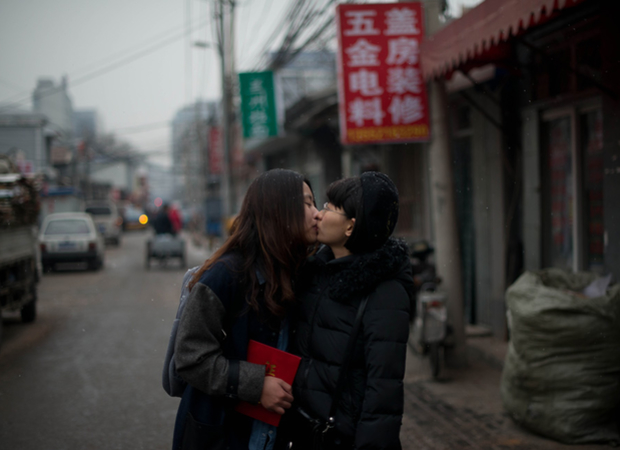
LGBT China
from Sinica Podcast
This week on Sinica, Jeremy Goldkorn and David Moser are joined by Fan Popo for a discussion of the way life works for the lesbian, gay, bisexual, and transsexual (LGBT) community in China. For those who have not heard of him, Fan is an accomplished...
The NYRB China Archive
09.14.14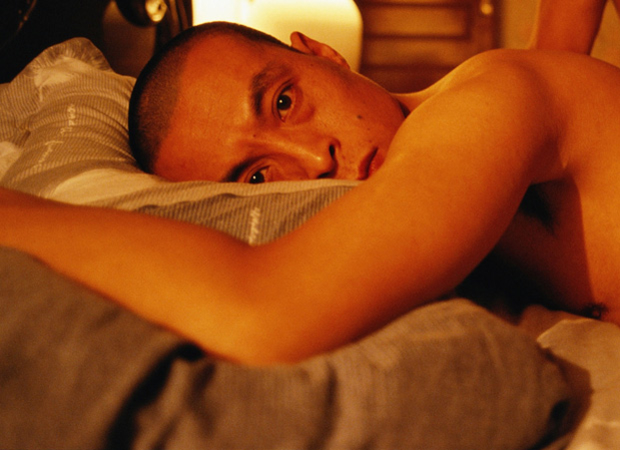
Sex in China: An Interview with Li Yinhe
from New York Review of Books
Li Yinhe is one of China’s best-known experts on sex and the family. A member of the Chinese Academy of Social Sciences, she has published widely on sexual mores, women, and family issues. Li also runs a popular blog, where she has advocated for...
Books
09.11.14
Powerful Patriots
Why has the Chinese government sometimes allowed and sometimes repressed nationalist, anti-foreign protests? What have been the international consequences of these choices? Anti-American demonstrations were permitted in 1999 but repressed in 2001 during two crises in U.S.-China relations. Anti-Japanese protests were tolerated in 1985, 2005, and 2012 but banned in 1990 and 1996. Protests over Taiwan, the issue of greatest concern to Chinese nationalists, have never been allowed. To explain this variation in China's response to nationalist mobilization, Powerful Patriots argues that Chinese and other authoritarian leaders weigh both diplomatic and domestic incentives to allow and repress nationalist protests. Autocrats may not face electoral constraints, but anti-foreign protests provide an alternative mechanism by which authoritarian leaders can reveal their vulnerability to public pressure. Because nationalist protests are costly to repress and may turn against the government, allowing protests demonstrates resolve and increases the domestic cost of diplomatic concessions. Repressing protests, by contrast, sends a credible signal of reassurance, facilitating diplomatic flexibility and signaling a willingness to spend domestic political capital for the sake of international cooperation. To illustrate the logic, the book traces the effect of domestic and diplomatic factors in China's management of nationalist protest in the post-Mao era (1978-2012) and the consequences for China's foreign relations.—Oxford University Press {chop}
Media
09.10.14
iPhone 6: Designed in California, Leaked in China
China’s cyberspace is bursting with anticipation for the iPhone 6—never mind that it promises to cost more than most citizens make in a month. Apple, the U.S.-based company that designs and sells the iPhone, had scheduled a major announcement about...
ChinaFile Recommends
09.08.14Tibet in Sichuan
Diplomat
Traveling the Tibetan plateau in Sichuan Province with indepdendent journalist Miguel Cano.
ChinaFile Recommends
09.08.14For Australia, a Celebration of China in Theme Park Form
New York Times
Get ready for Chappypie China Time, a $500 million, 39-acre Chinese culture theme park that aims to bring Australia a replica of the Forbidden City.
Culture
09.04.14
‘Transformers 4’ May Pander to China, But America Still Wins
Hollywood made news this summer with the China triumph of Transformers: Age of Extinction, which broke all previous Chinese box office records. The Chinese box office even outsold the North American box office. But jubilation over the film’s...
ChinaFile Recommends
09.04.14China to Limit Foreign TV Shows on Video-Streaming Sites
Wall Street Journal
Regulators expected to cap amount of imported television content at 30 percent.
Photo Gallery
09.03.14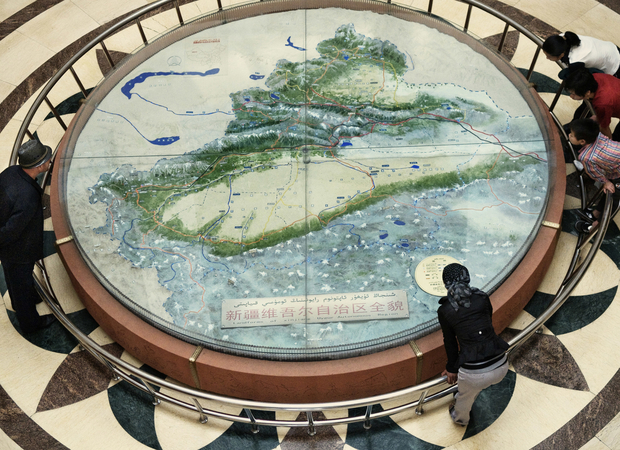
Xinjiang Unsettled
My first trip to Xinjiang was in 1995; it was also my first trip to China. The UN’s World Conference on Women was taking place in Beijing and I could only manage to secure a visa for China on the condition that I would not go to Beijing (the...
Media
09.02.14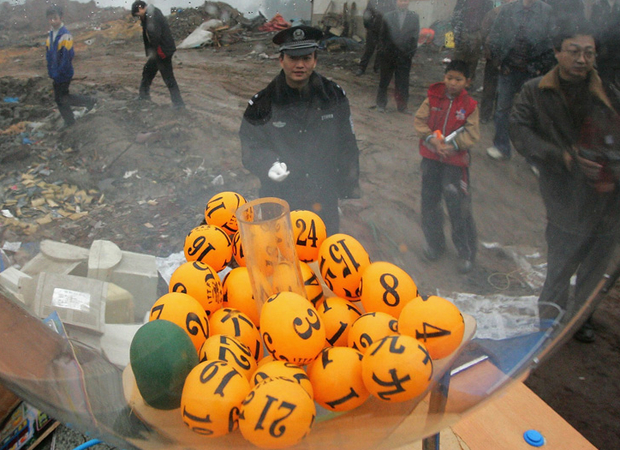
Anti-Vice Click-Bait Spawns Popular Govt. Social Media Feed
The Chinese government institution with the biggest social media following goes to...the nationwide anti-vice campaign called "Strike the four blacks, Eliminate the four harms." Da Sihei, Chu Sihai in Mandarin, the four blacks and four...
Conversation
09.02.14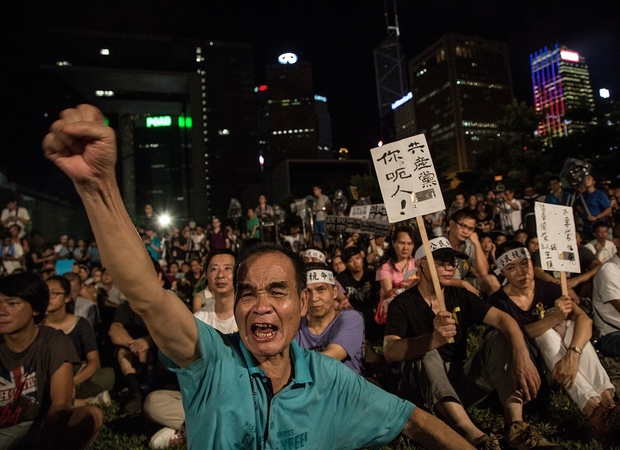
Hong Kong—Now What?
David Schlesinger:Hong Kong’s tragedy is that its political consciousness began to awaken precisely at the time when its leverage with China was at its lowest ebb.Where once China needed Hong Kong as an entrepôt, legal center, financial center,...
Books
09.02.14
Cities and Stability
China's management of urbanization is an under-appreciated factor in the regime's longevity. The Chinese Communist Party fears "Latin Americanization"—the emergence of highly unequal megacities with their attendant slums and social unrest. Such cities threaten the survival of nondemocratic regimes. To combat the threat, many regimes, including China's, favor cities in policymaking. Cities and Stability shows this "urban bias" to be a Faustian Bargain: cities may be stabilized for a time, but the massive in-migration from the countryside that results can generate the conditions for political upheaval. Through its hukou system of internal migration restrictions, China has avoided this dilemma, simultaneously aiding urbanites and keeping farmers in the countryside. The system helped prevent social upheaval even during the Great Recession, when tens of millions of laid-off migrant workers dispersed from coastal cities. Jeremy Wallace's powerful account forces us to rethink the relationship between cities and political stability throughout the developing world. —Oxford University Press {chop}
ChinaFile Recommends
08.29.14China’s Toilet Paper Makers Flush With Cash
Forbes
China’s invention of toilet paper in the 6th century, came well ahead of the availability of modern toilet paper in the United States, where inventor Joseph Gayetty first marketed it in 1857.
ChinaFile Recommends
08.29.14Sinica Podcast
08.29.14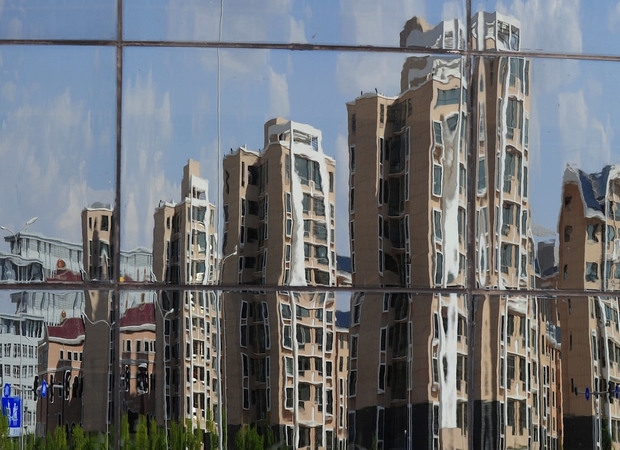
Ghost Cities to Luxury Malls
from Sinica Podcast
Remember the good old days when people didn't talk obsessively about real estate and housing prices, and dinner parties would feature conversations about art? Well, so do we, but with those days long gone we're delighted to host two...
ChinaFile Recommends
08.27.14Sport in China: What’s Wrong with Winning?
CNN
China has a fixation on training elite champions in select sports and an education system that considers sports a luxury and not a priority.
Culture
08.26.14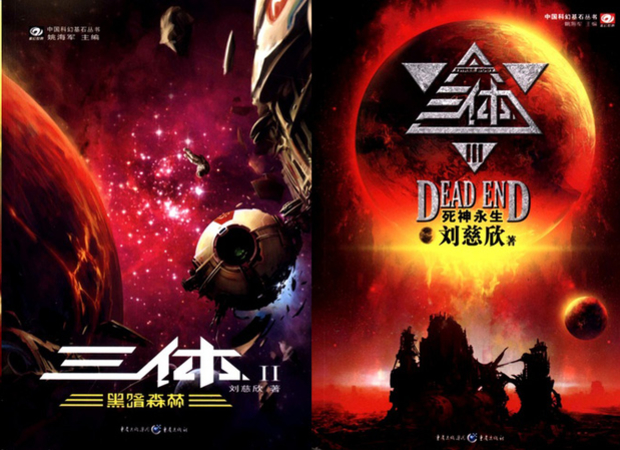
Healthy Words
In 1902, Lu Xun translated Jules Verne’s From the Earth to the Moon into Chinese from the Japanese edition. Science fiction, he wrote in the preface, was “as rare as unicorn horns, which shows in a way the intellectual poverty of our time.” Not any...
The NYRB China Archive
08.21.14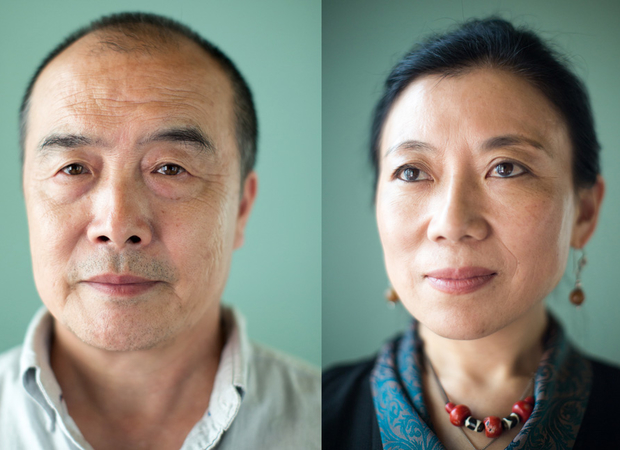
Wang Lixiong and Woeser: A Way Out of China’s Ethnic Unrest?
from New York Review of Books
Woeser and Wang Lixiong are two of China’s best-known thinkers on the government’s policy toward ethnic minorities. With violence in Tibet and Xinjiang now almost a monthly occurrence, I met them at their apartment in Beijing to talk about the issue...
The NYRB China Archive
08.21.14
Beyond the Dalai Lama: An Interview with Woeser and Wang Lixiong
from New York Review of Books
In recent months, China has been beset by growing ethnic violence. In Tibet, 125 people have set themselves on fire since the suppression of 2008 protests over the country’s ethnic policies. In the Muslim region of Xinjiang, there have been a series...
Caixin Media
08.19.14
A Chinese Town’s Imported Cambodian Brides
It is a hot and sticky midsummer day in a small village along the Chang River in the eastern province of Jiangxi. The most popular spot is in front of the local grocery where a few women are playing mahjong as children chase each other around...
ChinaFile Recommends
08.17.14ChinaFile Recommends
08.14.14My Chinese Education
New York Times
One Tibetan recounts how Beijing’s education system suffocates minority culture serving to unify the country under the rule of the dominant Han ethnic group.
ChinaFile Recommends
08.14.14China Tells Citizens to Walk, Bike, and Snitch in “United Struggle” to Breathe Easier
Quartz
The environmental ministry has published a set of guidelines for citizens, which encourage them not only to reduce their personal environmental imprint, but to also turn in polluting and wasteful neighbors.
ChinaFile Recommends
08.14.14China Denounces Pet Dogs As Filthy Imports from West
NBC News
In a recent People's Daily op-ed, pet dogs are referred to as a “crude and ludicrious imitation... of a Western lifestyle” and a blight on “social peace and harmony.”
The NYRB China Archive
08.14.14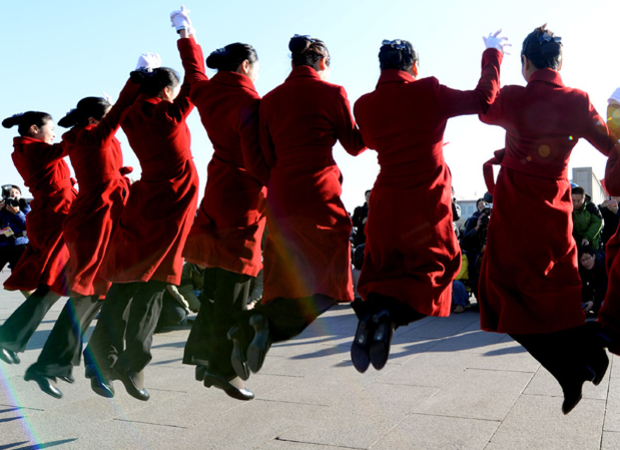
He Exposed Corrupt China Before He Left
from New York Review of Books
In the late 1970s, when the passing of Mao made it possible for foreign journalists to work in China for the first time in three decades, the first reporters to get in wrote wide-ranging books that addressed nearly everything they could learn.1...
Environment
08.12.14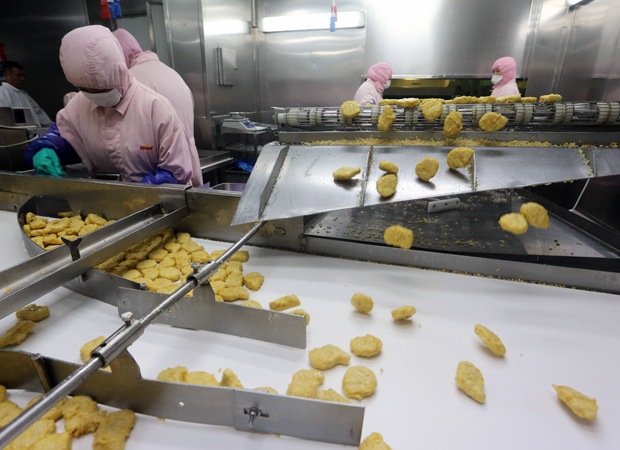
China Grows An Interest in Organic Foods
Late last month, news broke that a major Chinese supplier of American fast food brands was peddling meat that violated food safety standards.How do such scandals affect the way people in China feed themselves and their families? Chang Tianle, a...
Video
08.12.14
Chinese Dreamers
A dream, in the truest sense, is a solo act. It can’t be created by committee or replicated en masse. Try as you might, you can’t compel your neighbor to conjure up the reverie that you envision. And therein lies the latent, uncertain energy in the...
Culture
08.11.14
The Bard in Beijing
At the end of a rollicking production of William Shakespeare’s A Midsummer Night’s Dream—directed by Tim Robbins and staged in China in June by the Los Angeles-based Actors’ Gang—the director and actors returned to the stage for a dialogue with the...
Sinica Podcast
08.08.14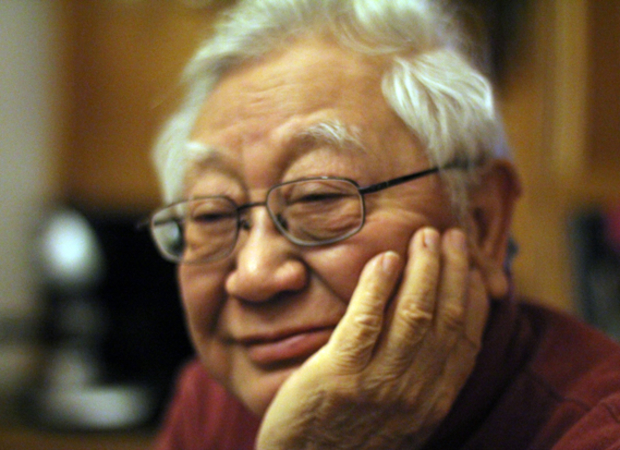
In Memory of Jenkai Kuo
from Sinica Podcast
This week on Sinica, Jeremy and David welcome back Kaiser to remember the life and lessons of his father, Jenkai Kuo (Guo Jingkai) (郭倞闓). He was an upstanding man who spent much of his life dedicated to his passions, none more important than his...
Media
08.07.14
Beards and Muslim Headscarves Banned From Buses In One Xinjiang City
A city in China’s remote western Xinjiang region has temporarily banned men with beards and women with Muslim headscarves from taking public buses. The extreme security measure—to be implemented for the duration of a sports competition slated to...