‘Mapping Myself onto a Vine or a Fish’
A Q&A with Leise Hook about Her Graphic Memoir ‘Names and Faces’
on May 7, 2026
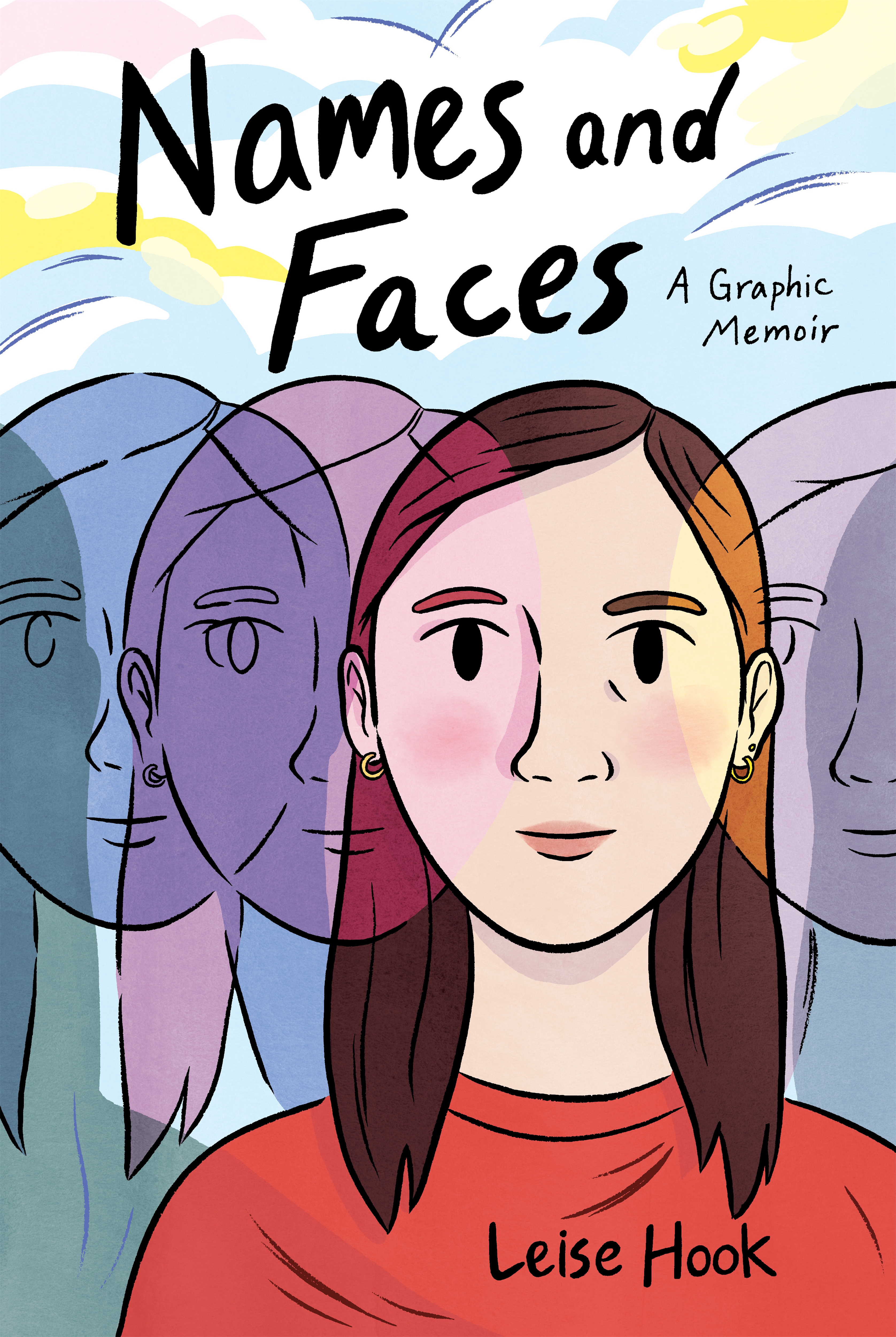
Leise Hook is a cartoonist and illustrator who lives in Stockholm, Sweden. She grew up in Virginia and Michigan, and previously worked in art museums in New York and Beijing. Her cartoons appear in The New Yorker and elsewhere, and she has just published a graphic memoir, Names and Faces, “examining the in-betweenness of being mixed-race.”
She spoke to ChinaFile’s Jeremy Goldkorn in April. This is an abridged, lightly edited transcript of their conversation.
Jeremy Goldkorn: Names and Faces gives the reader a look into your life, even some intimate moments, but we don’t get your whole story. I’m interested in what drew you to art and to cartoons and comics. In the book, it seems your grandmother’s huge library of photo albums played a role in your visual imagination. And faces, your own face and what it says about your identity, seem also to have pushed you to seek out forms of visual expression.
What drew you to comics and cartoons? It seems almost like a combination of your parents’ interest in words and your grandmother’s interest in images?
Leise Hook: I didn’t really think of my grandmother’s photography practice and of all of her photo albums as being so directly connected to my own interest in visual art. But I do think that there’s something there. And it’s not just my maternal grandmother’s love for photography, but also there being several people in my family and my life who practiced art, if not professionally, then as hobbies. My paternal grandmother was very interested in theater and also very interested in writing, though she didn’t pursue either of those things professionally. And both my parents, even though they’re linguists, have a deep appreciation for literature and visual art which definitely influenced me growing up.
Comics, specifically, came about in large part because of my father. He collected Little Lulu comic books in the 1950s. Some of the first reading materials I had as a kid were these Little Lulu comics, which I read with him. They played a big role in me learning how to read. If you’re not familiar with Little Lulu, it follows this very spunky, mischievous little girl in all of her antics, and she’s always besting the adults around her. So it’s very satisfying to read as a child.
Excerpts
05.08.26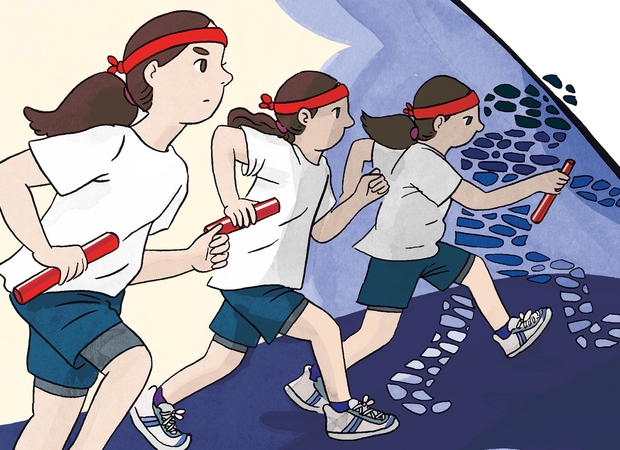
‘What Do You Need This Face to Do for You?’
With photography, I don’t think I’m the only person who’s had this experience: I always loved drawing, and then I started taking higher-level art classes in high school and realized that I wasn’t so successful at photorealism. And because of that, I immediately felt like I couldn’t really pursue drawing if I couldn’t draw things as they exactly appeared.
And in a way, turning to photography was kind of a way to get around that and be able to pursue image-making without having to spend the time fussing over little details. So that could just show the impatience that I have as a person. Even now, with comics, I still really love a very expressive, simple drawing over something that’s more laborious.
But photography almost gave you too much realism, so then you abandoned that completely and retreated into a more expressive mode, maybe?
Yeah, I think so. Two of the things that I loved the most while I was very serious about photography, one was sequencing images. Turning in projects in college, or working on photography exhibitions in Beijing: the process of going through and deciding, within a portfolio or on a wall, which image appears first, second, third. . . How does that impact the viewer’s experience of the story? Because even if there isn’t a three-act-structure kind of plot happening, just as a person looking at a series of images, a narrative is going to start to suggest itself. So I really loved that process of figuring out sequence, and seeing how just flipping a few images could really change how a sequence could be read. And then the other part I really enjoyed was creating more narratively focused photos.
Can you talk a little bit about how you developed the style that you use in Names and Faces, and if you consciously approached it differently from the way, stylistically, you approach your work for The New Yorker?
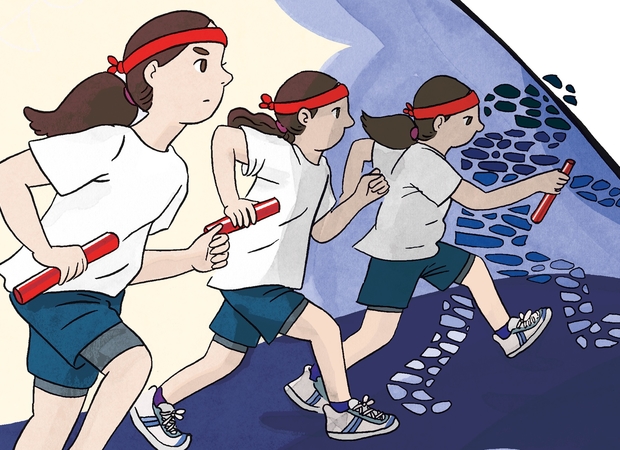
In terms of developing the style, some of it was conscious in that I tried to make each [of the nine different essays that comprise the book] slightly different, visually. The way that I completed the final art from essay to essay was a little bit different. For example, in the essay about Beijing, that was done with a layer of watercolor ink washes, and other chapters were completed with more flat-seeming digital color. I wanted it to feel that with each new essay, once the reader started reading, they could immediately feel like they were in a different story.
Beyond that, I think a lot of the style development was unconscious. I remember being an art student studying comics and always being very irritated when people who were professional artists came in and would say “style is kind of what happens unconsciously when you just keep drawing,” because I wanted to feel more in control of that process. But as I’ve continued working, I have found that they are unfortunately correct. There’s only, I think, so much you can do to try and influence where your style goes. Otherwise, it’s just the hours you spend at the drawing table. And your hand has a particular wobble. And you’re going to have particular blind spots. And all of those things kind of come together and create a style, despite your best intentions.
You’ve lived in college towns in Virginia and Michigan, and also in Tokyo and in Beijing, and now in Stockholm. Do any of these places feel more or less like home?
And I’ve also lived in New York City. Yeah, I feel like I’m still figuring out my relationship to the sense of any one place being home. I think I’m emotionally still very connected to Ann Arbor, Michigan, just because I lived there until I was 14. And those were some very formative years of childhood and everything.
But I don’t have any family that lives there. Many of my closest friends are no longer there. It’s become an emptied-out place. So there’s no reason for me to really go back. I feel like home is really connected to the people that are there. I think also, given the fact that my parents are academics and they were moving where the jobs took them, I never had the experience of growing up or living in a place where there was family and extended family, and a sense of roots extending beyond the current generation. Sometimes I really wish that I had more of that experience, but other times I’m really grateful for how free it’s allowed me to feel, and just having the sense that I can trust myself and feel confident that I can go someplace and make it a home for myself and for the people around me.
Names and Faces isn’t really a search for home but it is, I think, a search for identity. Do you remember when you first started becoming aware that you felt out of place? Was it about the time that you suddenly realized there were no Asian-looking dolls? Or was it at weekend Chinese school?
I guess I don’t have so many clear, distinct memories of feeling out of place. In my memory, it was just sort of always like an ambient background feeling. With the Chinese weekend school, there was the obvious difference that all my classmates were speaking Mandarin Chinese with both of their parents, and my father does not speak Chinese. So immediately just that sense of, for all of them, they had this home language that fully encompassed their home life. Whereas when I was home, I was still switching back and forth between Chinese and English. That was a big difference that I had a sense of early on. The other thing, too, was that in Ann Arbor, broadly speaking, the Chinese American community was more concentrated in certain parts of the town and my family did not live in those areas. And so my classmates all went to the same public schools together, and they all kind of knew each other from their Monday-through-Friday public school experience as well. Whereas I was just sort of dropping in on the weekends.
And then, the other part, with the dolls, it’s interesting: I don’t think I’m the only millennial American woman that has these very deep-seated memories of American Girl dolls and just how big of a deal they were in the ’90s. I think part of that was just their price tag, them being like a luxury item for children. But I also think that they were an early vehicle for me to think about race as a child in a way that other toys or media didn’t really invite me to. I’m not sure that the American Girl doll company was really intending to invite kids to think about that, but if you’re selling dolls to look like the kids who are buying them, that just immediately becomes part of the conversation in a place as diverse as the U.S.
How so?
At a certain point, American Girl released this new line called “American Girl of Today.” The idea was instead of being a historical doll, they were dolls that had different combinations of features and coloring and were meant to be lookalike dolls for the kids buying them. Of that grid of faces that you could pick from, there was the one doll that was obviously East Asian coded. And I remember as a child knowing that was the doll that I was supposed to feel the most connected to. And I didn’t, because I didn’t really look that much like her, I thought. That experience was very confusing to me. Having the sense of not being represented by these dolls, even though I’m supposed to feel represented by this one particular doll, it still is not quite fitting. So where does that leave me?
I ended up choosing a doll that had nothing to do with East Asian heritage, but I felt connected to in different ways, and also just liked, purely superficially, because I felt that I looked more like the Hispanic doll. It’s a bit sad to reflect on, but I think I was thinking through it the best I could as a kid.
It’s not sad. It’s just how kids make sense of the world is really tough. Sort of related to this, my mother was just telling me a story about a school friend of my niece who is now grown up, but she went to school here where I’m calling from in Auckland, New Zealand, and she had a friend who was Chinese, but was born and grew up in Auckland. In elementary school, he came home one day and said to his parents, “Am I Chinese?” Because they’d never told him he was Chinese. He just thought he was a New Zealander, and when he got to school people pegged him.
Yeah, those things are so confusing. I have a related story, which is that my dad, who’s a white American, spent his whole career studying and teaching South Asian languages and linguistics and literature. And so as a child, I saw my dad, all of his colleagues, all of his close friends, were Indian. And I distinctly remember talking to him one time and saying, well, I’m American, Chinese, and Indian. And he had to sort of stop me and correct me and say, actually you’re not Indian. And I probably said something like, well, but you’re Indian. I hear you speaking Hindi on the phone all the time, and all your friends are Indian. And he said, no, I’m not Indian. It takes a little time, I guess, before as a kid you catch up kind of with how all these labels work.
One of the lovely surprises of the book was the essay “The Vine and The Fish,” about kudzu and Asian carp. I wasn’t expecting a really interesting biology lesson.
From the way you write it, the first time the idea of the Asian-ness of these plants and animals seems to have seized you was in Ann Arbor, when you experienced Asian ladybird swarms. Was that the first time?
Yes. In a word, yes. With the Asian lady beetles, that was certainly the first time the naming conventions around invasive species entered my mind. I was a kid and not quite able to make sense of it, but I was growing up in an environment where, aside from Chinese weekend school, there wasn’t a whole lot of Asian . . . anything, I guess, happening outside of my own home. In school, none of my friends, my close friends growing up, were Asian. So to have something that everyone was talking about that was Asian and have it be so negatively received really made an impression on me.
I think the other part of it, too, was there are a lot of picture books and children’s literature where ladybugs are cute or beautiful or the main character, just benevolent and non-threatening. And it struck me that all of a sudden these ladybugs for some reason were not benevolent. They were disgusting. They needed to be exterminated and gotten rid of. I certainly didn’t have the language or the framework to think about it more deeply than just sort of noticing it as a kid. And then it just became a thread through my life where every once in a while I would again notice, you know, Asian carp or, oh, kudzu—people really, really seem to hate this thing in the environment.
Finally, we had an assignment for my MFA program in comics where we could choose whatever topic we wanted. I had it on a long list of possible topics I wanted to make a nonfiction comic about. And my husband said, this one seems the most interesting, I’ve never thought about it, I would love to read a comic about this. So that was it, really.
The topic seemed to tap into something you really wanted to express?
I really enjoyed the research process. The thing that really struck me while I was writing the comic and drawing the comic was I was so desperate to find a way to absolve all of these invasive species from any wrongdoing. I was always looking for a reason for why, actually kudzu wasn’t that bad. And actually, Asian carp is not a threat to this ecosystem. And after a while I had to stop and ask myself, why am I so invested in these invasive species not actually being that bad and actually being a positive? If only people could see. And I realized it was because I had internalized all these ideas around these invasive species and decided that they were all reflections on me, in large part because of the naming. I think that I had connected myself to them so closely, given the environment and country and culture I’d grown up in, that I really wanted the invasive species to be innocent because that would mean that they could be embraced, understood, and accepted the way I wanted to be embraced, understood, and accepted.
I think that really unlocked an important part of that comic for me, realizing that I couldn’t see the situation clearly because of sort of mapping myself onto a vine or a fish.
But the other thing you make clear is that the problems caused by invasive species and pandemics are problems that are caused by borders collapsing and they can only be solved by international collaboration, not by putting up barriers.
Right. The other thing that I was struck by while I was working on it was that in managing invasive species, a lot of the language assigns intention to a ladybug or a vine. And in many cases, humans introduced the species to do something helpful and then for whatever reason the situation got out of control.
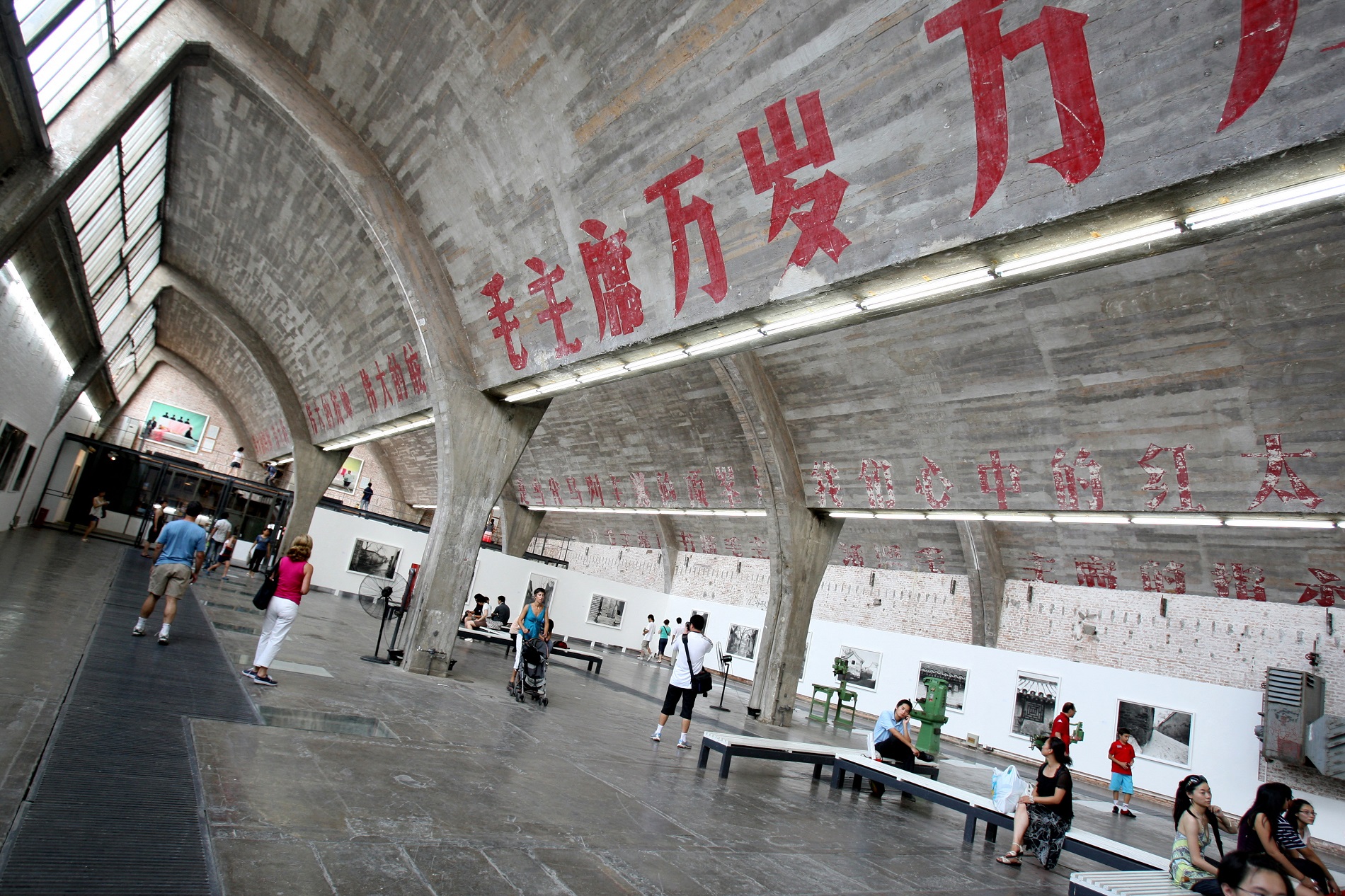
The chapter on your life in Beijing made me anxious for you while I was reading it. How much of the stress of that time do you think was because you couldn’t really feel at home in the place where you were supposed to find your roots? And how much was the result of a high-stress job with demanding and unpredictable bosses, and the grind of running a cultural enterprise in Beijing—a city, I know from hard personal experience, that is hostile to independent cultural activities? I mean, if you’d been just doing some easy job, like hotel marketing and you were just chilling and sipping cocktails every night, maybe you wouldn’t have worried so much about your identity?
I think you could definitely have a point there. I did know some people who were English tutors or doing marketing work or doing stuff that was a little less stressful. . . Yeah, that essay was very challenging to write. I think for so long, through most of my 20s, I really felt that I had failed in a big way in how I spent my time while I was living in Beijing. I felt like I didn’t get this gallery off the ground in the way that everyone had hoped I would. Just feeling like I had failed and I let people down. That was a very heavy weight to carry. So working on that essay helped me gain a little bit more clarity and distance and just sort of see that, like you were saying, there were a lot of factors conspiring to make it a very, very stressful experience on top of just being a recent college grad and being so green and not knowing how things were supposed to or could work.
I try to have a lot of compassion for my younger self, but it is a little bit funny to me now, looking back and thinking that I had this sense of certainty that I was going to, you know, reverse migrate. I was going to go back to the city of my maternal grandmother and find the place where I belonged when I had only cumulatively spent maybe a month in Beijing prior, and I don’t look particularly Chinese, and I was going to be a foreigner. I wasn’t fully prepared for that experience of being perceived as—and just being—a foreigner, having come from a different culture and feeling like a lot of things were a little bit uncomfortable because I didn’t know how they worked.
I think the other complicating factor was that, being half Chinese, it made it more complicated to hang out with other American, mostly white expats because I think a natural part of hanging out with other expats is relaxing together and talking about the local customs that you don’t understand and that maybe alienate you or disgust you. And that for me got loaded very quickly.
Writing narrative or long-form comics, compared to one-panel humorous cartoons, seem to require a completely different process?
They feel like completely different parts of my brain. If I’ve been on a good streak of submitting gag cartoons, when that gag cartoon muscle in my brain feels really in shape, the way I experience my everyday life feels so different because it’s that part of myself that’s noticing things or thinking, could this be made into something kind of funny, a funny drawing, a gag cartoon? Part of me is on alert to everything that’s happening around me. That can be kind of annoying. It also can make everyday life more meaningful, because I’m really noticing and observing constantly. For the longer-form comics, it’s just so much more of a process. Gag cartoons feel like sitting down and practicing the ability to generate ideas quickly, and also being able to move on quickly when an idea doesn’t seem to be working out. With a longer-form comic, for me, there’s usually a kernel of an idea that I’m really interested in, but it’s a longer, sometimes more torturous process to get to the thing that I’m trying to make. And also, there’s a lot more room for the ideas and the story to evolve and change and even surprise me while I’m working on it.